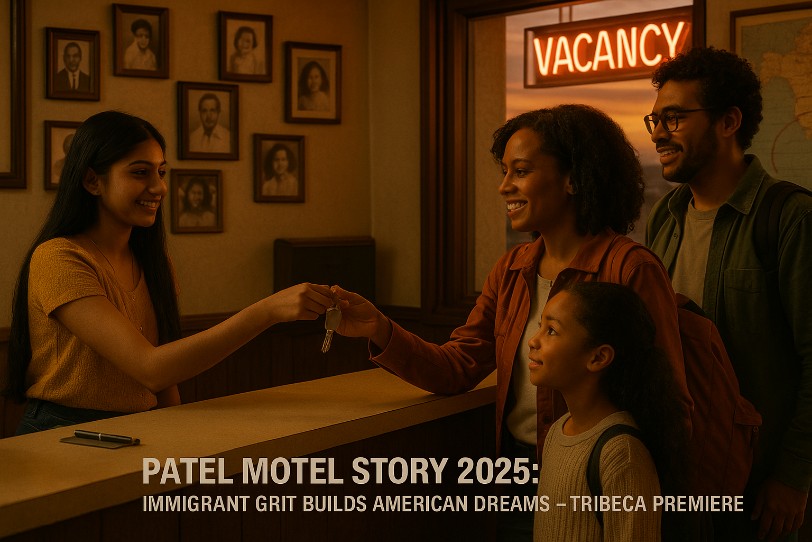

In the flickering neon glow of a roadside motel in DeLand, Florida, young Amar Shah once hid behind the counter, cheeks flushed with the sting of a child’s embarrassment. “Counter kid” duties—tallying bills, sweeping floors—felt like a secret shame in a world that prized white-collar dreams. Yet decades later, as co-director of “The Patel Motel Story,” Shah stands tall, reclaiming those nights as the foundation of an empire. The Patel motel story 2025 isn’t just a film premiere at Tribeca—it’s a tapestry of grit and grace, where Gujarati immigrants transformed America’s lonely highways into homes, weaving their survival into the nation’s hospitality soul.
The Human Toll: Echoes of Family Sacrifice Motels
Step into the corridors of memory: A nine-year-old Jyoti Sarolia, phone receiver heavy in her small hands, answering guest queries at her family’s first motel. By 11, she was fluffing pillowcases; by 14, managing shifts solo. “You felt like you had a mansion—all these corridors and extra rooms. It was our playground,” she recalls, her voice warm with the patter of hide-and-seek amid endless chores. The Patel motel story 2025 captures this bittersweet symphony—the joy of belonging clashing with the weight of endless labor, where “family sacrifice motels” became both refuge and rite of passage.
For countless Gujarati children, motels were makeshift classrooms and playgrounds, but also crucibles of isolation. Parents toiled through nights, faces etched with unspoken worries over visas and belonging, their kids bridging cultures with every “welcome” at the desk. Shah, once mortified by his parents’ gas station-motel hybrid, now honors it: “As you get older, you start to see it differently. You understand the sacrifices and the grit it took for that generation to build a life for us.” These stories hum with quiet heroism, a reminder that behind every vacancy sign lies a family’s unyielding bond, forged in fluorescent-lit lobbies.
Facts and Figures: The Rise of Hotel Industry Dominance
The numbers tell a tale of quiet conquest. Indian immigrants and their descendants helm over 60% of U.S. hotels and motels—from humble roadside stops to opulent Four Seasons—despite being just 1% of the population. The Asian American Hotel Owners Association (AAHOA) boasts over 33,000 member properties, fueling millions of jobs and billions in annual revenue.
This hotel industry dominance traces to the 1940s and 1950s, sparked by pioneers like Kanji Manchhu Desai, the “godfather of Indian-owned hotels.” Arriving undocumented from Gujarat via Trinidad in 1934, Desai toiled in California fields before managing WWII-era hotels, including one in Sacramento vacated by interned Japanese Americans. He penned letters urging kin to lease motels—affordable entries into ownership via handshake loans and shared housing—igniting a Gujarati wave, where the surname Patel became synonymous with hospitality.
Key milestones:
- Ownership surge: From Desai’s first leases post-WWII to today’s multi-generational firms like Sarolia’s Ellis Hospitality Group, managing eight properties.
- Economic footprint: AAHOA members contribute $300 billion+ yearly to the economy, per Oxford studies.
- Demographic core: Gujarat origins dominate, with Patels leading due to regional naming conventions.
Gujarati Immigrant Legacy: From Fields to Front Desks
The Gujarati immigrant legacy shines in Desai’s mentorship, transforming blue-collar toil into real estate realms. Shah reflects: “My relatives… weren’t stuck. They were quietly building real estate empires.” Yet early hurdles loomed—undocumented risks, cultural stigma—paving a path of resilience that redefined opportunity.
For industry primers, explore our guide U.S. Hospitality Evolution.
Broader Context: Weaving Threads of the American Dream
The Patel motel story 2025 threads into America’s immigrant mosaic, echoing waves from Irish taverns to Chinese laundries, yet often untold. “We learned about the Mayflower… but we never heard our own parents’ stories,” laments filmmaker Milan Chakraborty, spotlighting the erasure of South Asian narratives. Challenges persisted: Post-1965 Immigration Act influxes met suspicion, with motels as “rough” gateways amid discrimination’s shadow.
Today, it underscores economic alchemy—turning exclusion into excellence—while highlighting disparities: Rural motels sustain communities but expose owners to economic whiplash. Globally, it inspires diaspora tales, from UK’s corner shops to Canada’s trades. For deeper roots, read our feature Immigrant Entrepreneurs in America.
What Lies Ahead: Celebrating and Sustaining the Legacy
The film’s festival trail—from Tribeca’s June premiere to screenings in Orlando, Seattle, San Francisco, and New Orleans—invites more voices, potentially expanding into a docuseries. Families like Sarolia’s evolve, blending tradition with tech: Digital bookings, sustainable upgrades, passing batons to Gen Z stewards.
Resilience blooms in preservation: AAHOA scholarships, heritage museums. As Shah urges, reclaim these tales to honor the grit. For festival updates, follow CNN Travel’s Doc Spotlights or AAHOA’s Impact Reports.
Timeless Check-Ins: The Enduring Patel Motel Story 2025
The Patel motel story 2025 whispers of arrivals that shaped skylines, where Gujarati immigrant legacy turned neon dreams into dynasties. For Shah’s counter kid heart, Sarolia’s hallway races, Desai’s daring letters—may we check in with gratitude. In every motel lobby, their spirit endures: A welcome that built not just beds, but bridges to belonging.