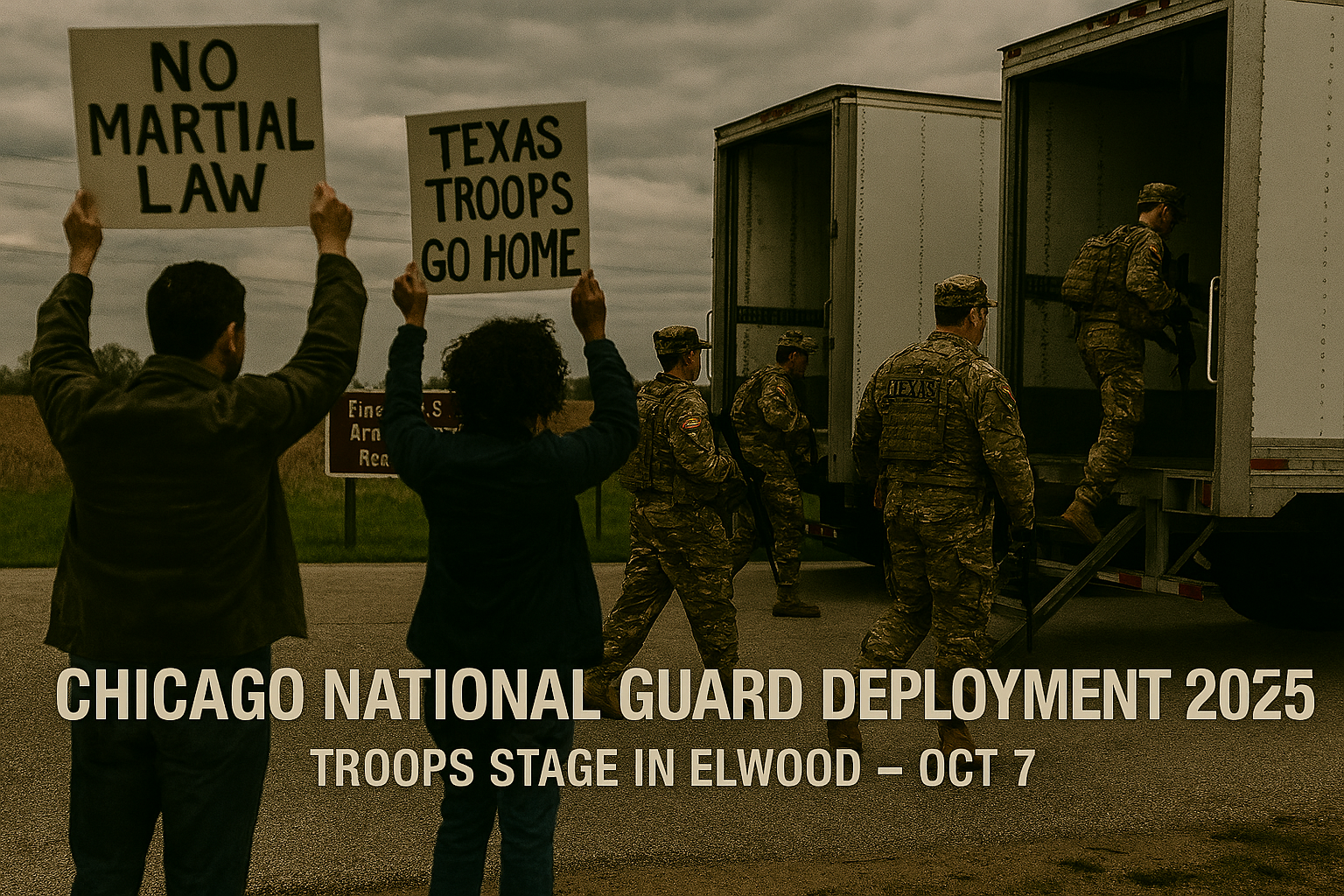

As the sun set over the vast 3,600-acre expanse of the U.S. Army Reserve training center in Elwood, Illinois, on October 7, 2025, a line of camouflage-clad Texas National Guard members filed into mobile sleeping units, their long guns slung over shoulders, a stark intrusion into the quiet farmland. Nearby, Will County resident Erin Gallagher held a sign reading “No Troops in Our Backyard,” her voice joining a small but fervent protest against what she called an “armed occupation.” The Chicago National Guard deployment 2025 had materialized—not in the city’s bustling streets, but in this unlikely staging ground 40 miles south—marking a federal flex that deepened divides and stirred souls. For immigrant families in Chicago’s Pilsen and Little Village, it was a distant rumble of dread, a reminder that sanctuary promises could crumble under military might, turning everyday routines into rituals of vigilance.
The Human Toll: Quiet Dread in Immigrant Community Fears
Envision a South Side mother, her hands trembling as she packs lunches, whispering to her children about “the soldiers coming,” echoes of September’s tear-gassed protests at the Broadview ICE facility still fresh. The Chicago National Guard deployment 2025 amplifies these immigrant community fears, with 150 detentions under Operation Midway Blitz already fracturing families—parents vanishing mid-shift, children shuttled to relatives amid the chaos of raids near schools. For Erin Gallagher, protesting in Elwood’s chill, it’s personal: “This isn’t protection; it’s provocation,” her words capturing the unease rippling through Will County, where locals eye the influx warily, fearing disrupted commutes and a militarized normalcy.
Communities bear the emotional scars: In Franklin Park, the fatal shooting of Silverio Villegas-González on September 23 lingers, a father’s life cut short in an arrest gone wrong; in Brighton Park, a woman’s October 5 wounding after ramming a federal vehicle adds to the tally of mistrust. These aren’t isolated incidents; they’re the hushed bedtime stories of evasion, the canceled block parties, fostering a resilient undercurrent—neighbor watch networks, faith-based safe houses—yet underscoring the profound isolation: Families not just displaced, but diminished, their American dreams deferred in the shadow of camo and checkpoints.
Facts and Figures: The Mechanics of Texas Troops Arrival
The arrival capped a whirlwind: On October 6, Texas Gov. Greg Abbott authorized 400 National Guard members, federalized by President Trump under Title 10, joining up to 300 Illinois troops for at least 60 days to safeguard ICE facilities and officers. By October 7, Texas contingents rolled into Elwood’s former Joliet Army Ammunition Plant site, observed by Tribune journalists entering sleeper units, showers, and a dining hall for 250 personnel—no street deployments yet, per Gov. JB Pritzker.
Key stats illuminate the scope:
- Troop breakdown: 400 Texas, up to 300 Illinois (needing medical checks and training before action).
- Operation focus: Midway Blitz protects feds from “coordinated assaults,” following Dallas’s September shooting (two detainees killed) and Chicago incidents.
- Protests and arrests: Small gatherings at Elwood; 50+ arrests since October 1 in broader unrest, with no major injuries reported.
A September 26 DHS memo requested 100 troops initially, citing protest escalations like baton rounds at Broadview.
Operation Midway Blitz: Enforcement’s Edge
The Operation Midway Blitz—DHS-led raids—has netted 150 detentions, but Illinois officials decry lack of coordination, with troops staged federally after state armory refusals. Pritzker: “They’ve not been deployed anywhere that I am aware of.”
For immigration enforcement overviews, see our guide Operation Blitz Explained.
Broader Context: Federal Overreach in Sanctuary Strongholds
This Chicago National Guard deployment 2025 echoes 2020’s Portland surge—2,000 agents, endless clashes—but ties to Trump’s immigration crackdown, targeting sanctuary cities like Chicago (500,000+ immigrants). Trump’s October 7 Oval Office remarks floated the Insurrection Act: “Chicago is a great city where there’s a lot of crime. The mayor is grossly incompetent.” Abbott’s X post: “Get out of the way and let Texas Guard do it.”
The Pritzker federal lawsuit, filed October 6, invokes Posse Comitatus and state sovereignty, naming Defense Sec. Pete Hegseth and others; Judge April Perry denied an immediate block October 7, giving feds until midnight October 8 to respond. Parallels: Oregon’s October 4 block (overturned), California’s reversed ruling. Locally, Will County’s Jennifer Bertino-Tarrant decried “aggressive overreach,” while Elwood’s Chief Fred Hayes pledged minimal disruption.
Broader ripples: Depressed tourism, business dips in affected areas; Sen. Tammy Duckworth called it “Gestapo tactics.” Globally, it mirrors EU migrant enforcements, highlighting urban-rural divides in policy pain. For parallels, read our analysis Sanctuary City Federal Clashes.
What Lies Ahead: Court Rulings and Street Standoffs
Perry’s deadline could halt or hasten deployments, with Illinois Guard training delaying action if approved. Johnson eyes “more dramatic” measures, like marathon resistance with 3,000 Mexican runners unaffected. Protests may swell, but sheriffs affirm no ICE aid per state law.
Resilience demands bridges: Community alerts, de-escalation trainings. As Walsh Jr. noted, “Our peace of mind taken from them.” For live updates, follow Chicago Tribune’s City Coverage or Reuters’ Immigration Watch.
Sanctuary’s Stand: Resolve in Chicago National Guard Deployment 2025
The Chicago National Guard deployment 2025 casts a long shadow over Elwood’s fields and Pilsen’s porches, where Texas troops arrival meets unyielding spirit. For the mother’s vigilant nights, Gallagher’s protest sign, this federal tide tests Chicago’s soul—not in submission, but in solidarity. In the Operation Midway Blitz‘s wake, may justice’s gavel echo louder than boots, preserving a city where fear yields to fortitude.