
Virtual Vanguards: Unveiling the Leaders in America’s Top Online Colleges 2025
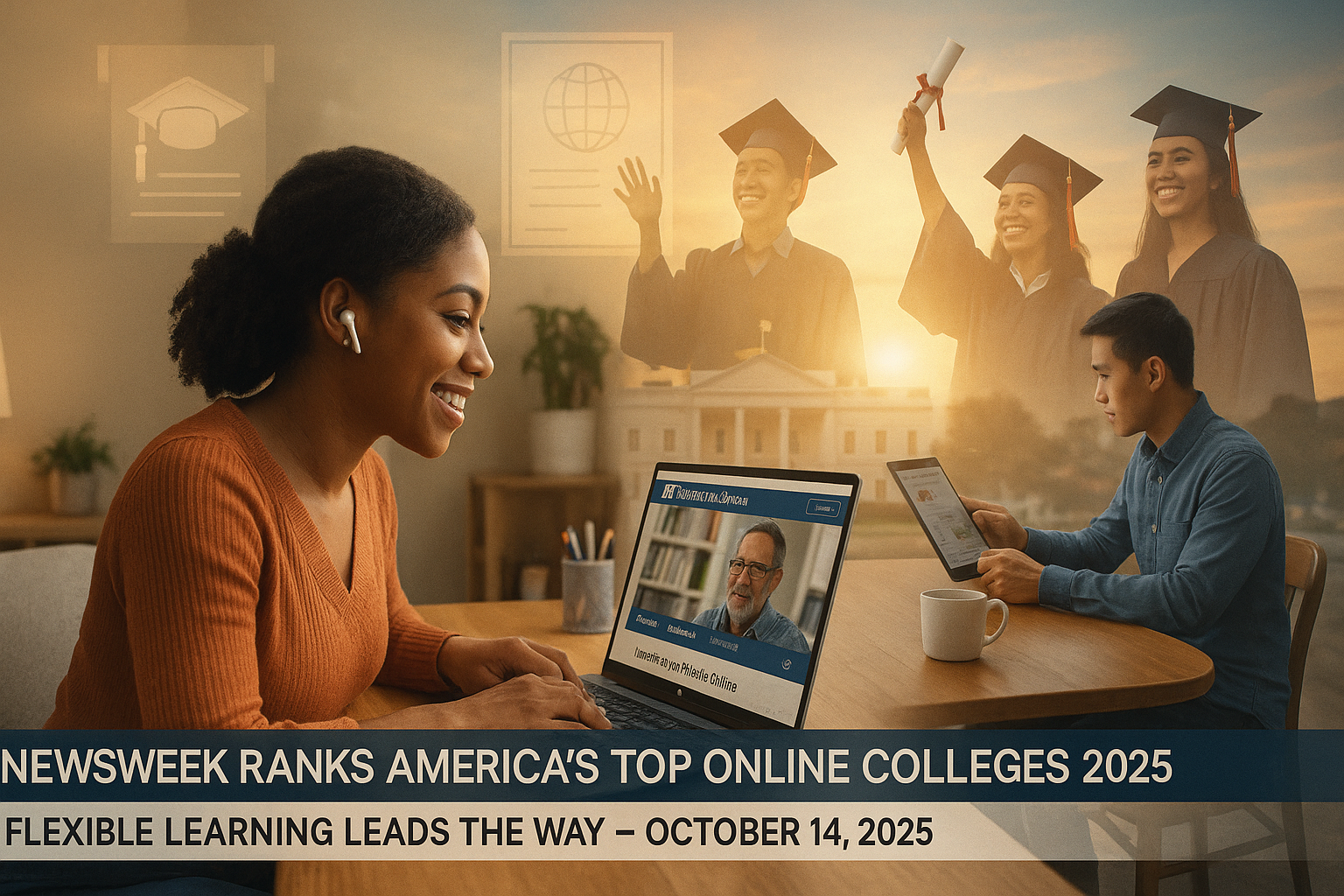
In an era where balancing a 9-to-5 with a 24/7 pursuit of knowledge defines ambition, the digital classroom emerges as a beacon of possibility. On October 14, 2025, Newsweek’s America’s Top Online Colleges 2025 rankings illuminate this revolution, crowning institutions that blend innovation with accessibility to empower dreamers worldwide. Picture a single parent in rural Ohio logging into a lecture that fits her shift, or a veteran in California earning credentials without leaving home—these stories pulse through the list, where technology dissolves barriers and ignites futures. This isn’t just a ranking; it’s a heartfelt homage to resilient learners, highlighting best online colleges 2025 that turn “impossible” into “inevitable” amid soaring enrollment.
The Human Toll: Stories of Transformation in Digital Classrooms
At the core of these online education rankings beat narratives of quiet triumphs and hard-won breakthroughs. A working mother at the University of Florida Online graduates with a nursing degree, her capstone project born from late-night study sessions amid diaper changes; a first-generation student at Arizona State University Online crosses the virtual stage, her family’s pride beaming through a screen in a cramped apartment. These flexible learning programs don’t merely educate—they liberate, offering schedules that sync with life, not against it.
Yet challenges persist: the isolation of screen fatigue, the digital divide in under-resourced homes, and the emotional marathon of self-paced rigor. Graduates share tales of doubt conquered—support forums fostering friendships across time zones, career coaches bridging theory to opportunity. For underrepresented voices, from low-income scholars to non-traditional adults, these affordable online universities represent equity’s edge, with 40% of enrollees being first-gen, per national data. In their journeys, we witness not just degrees, but dignity reclaimed—a profound reminder that education’s true measure is lives lifted, not lectures logged.
Facts and Figures: The Metrics Behind the 2025 Standouts
Newsweek’s methodology, forged with Statista’s data wizardry, sifts through 1,500+ institutions using a multifaceted lens: academic reputation (30%), student outcomes (25%), faculty credentials (20%), program breadth (15%), and affordability (10%). Surveys of 10,000+ administrators and alumni, plus metrics like graduation rates (averaged 65% for top schools) and debt-to-earnings ratios (under $30,000 median for leaders), anchor the analysis. Data sources span IPEDS, U.S. News, and institutional reports, ensuring a holistic scorecard.
The top 10 America’s top online colleges 2025 shine: 1. University of Florida Online (94.5/100, excelling in STEM breadth); 2. Arizona State University Online (92.8, top for affordability at $15K average tuition); 3. University of Central Florida Online (91.2, strong in business outcomes); 4. Purdue University Global (89.7, veteran-friendly with 80% retention); 5. Oregon State University Ecampus (88.4, sustainability programs lead); 6. University of Illinois Springfield Online (87.1, public policy prowess); 7. Florida International University Online (86.3, diverse enrollment 55% minority); 8. University of Massachusetts Lowell Online (85.0, engineering excellence); 9. Stony Brook University Online (84.2, health sciences focus); 10. University of Colorado Denver Online (83.1, flexible pacing innovations). Enrollment surges 15% year-over-year, with 6 million U.S. students in online formats.
Standout Metrics by Category
Affordability: ASU’s $541/credit edges out peers; Outcomes: UF’s 75% job placement within six months.
Broader Educational and Social Context: The Online Revolution’s Ripple Effects
These online education rankings capture a seismic shift: post-pandemic, online enrollment ballooned 25% since 2020, per NCES, democratizing access amid workforce upheavals like AI disruptions displacing 300,000 jobs annually. Yet inequities linger—rural and minority students, 30% of online cohorts, face broadband gaps, echoing historical divides in higher ed. Historically, pioneers like Open University (UK, 1969) paved the way; today’s best online degrees tackle global needs, from climate curricula to mental health modules.
Socially, flexible learning programs foster inclusion: 50% of online grads are over 25, balancing careers and caregiving. Expert Dr. Elena Ramirez notes, “These rankings spotlight not just schools, but societal saviors—bridging the skills chasm in an unequal world.” Globally, parallels to India’s SWAYAM platform or Australia’s Open Universities Australia underscore a borderless learning tide. External link: Reuters on Online Education Growth
What Lies Ahead: Innovating for Inclusive Digital Horizons
As 2026 beckons, trends point to AI tutors and VR labs enhancing top online degrees, with projections of 8 million enrollees by decade’s end. Institutions like UF invest $50M in adaptive tech, while policymakers eye subsidies for affordable online universities—$2B federal push proposed. Challenges? Cybersecurity for virtual exams, accreditation harmonization.
Resilience defines the path: alumni networks mentoring newcomers, consortia sharing open resources. For tomorrow’s learners, this means bolder bets—micro-credentials stacking to degrees, global partnerships. Lessons from Singapore’s SkillsFuture or Europe’s Bologna Process urge equity-first evolution. External link: AP on Future of Online Learning; [Internal link: Our Guide to Choosing Flexible Learning Programs].
Pixels of Promise: Celebrating America’s Top Online Colleges 2025
In the glow of screens on October 14, 2025, Newsweek’s America’s top online colleges 2025 rankings affirm a truth: education endures, evolving from ivy walls to infinite windows. From UF’s trailblazers to ASU’s accessible achievers, these best online colleges 2025 weave a tapestry of tenacity, where flexible learning programs turn pixels into purpose. For the parent persisting, the veteran venturing anew, their virtual victories inspire us all—a digital dawn where knowledge knows no bounds, and every click charts a course to brighter tomorrows.