
A Step Back in Time: Where Hooves Echo Louder Than Engines
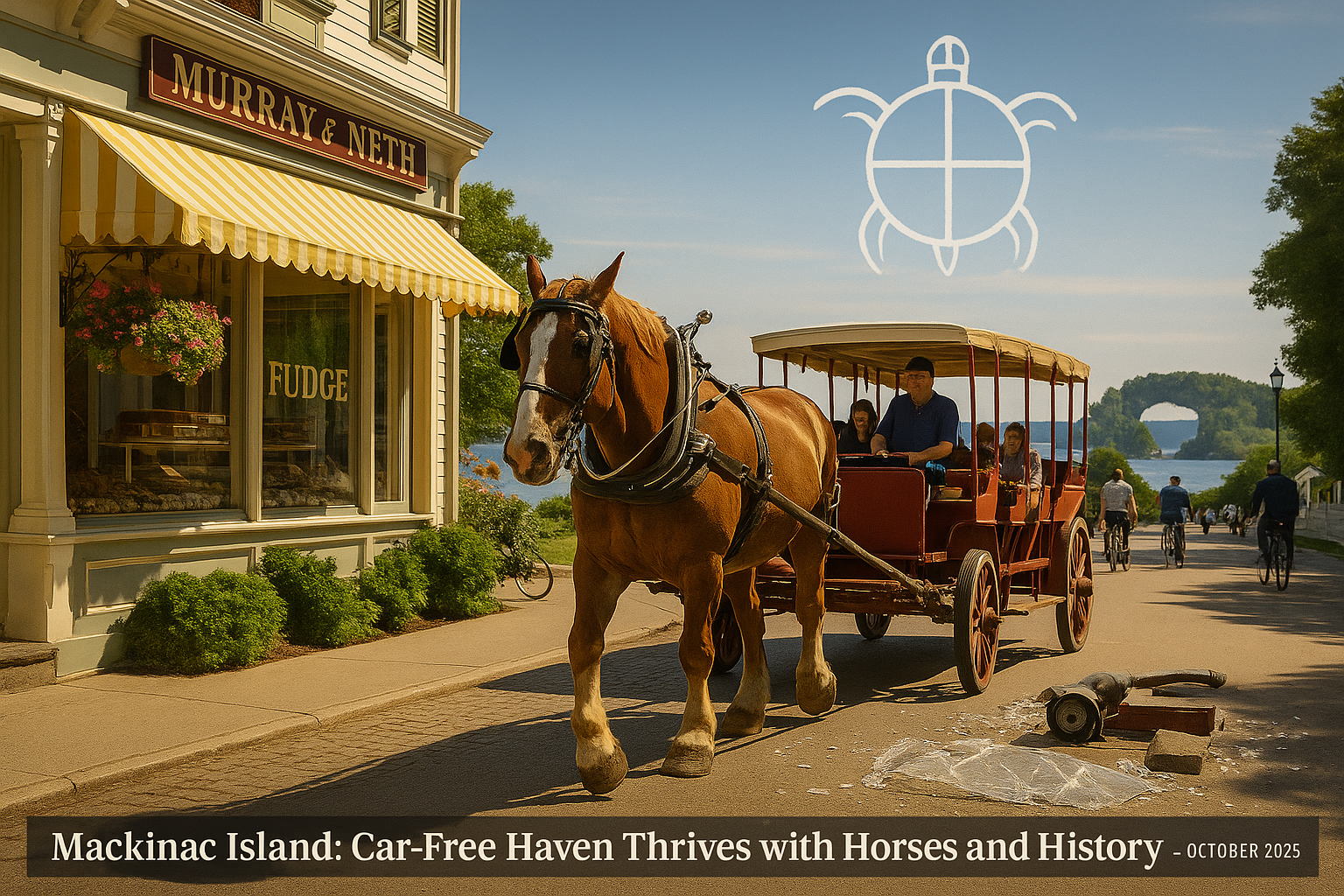
Picture stepping off a ferry onto a shore where the hum of engines is replaced by the rhythmic clip-clop of hooves, and the air carries the sweet scent of fudge instead of exhaust. On Mackinac Island, a 3.8-sq-km jewel nestled in Lake Huron, this is daily life—a car-free haven where 600 residents and 600 horses preserve a rhythm unchanged since the 19th century. In Michigan, the “car capital of the world” that birthed Ford and GM, this island bans vehicles, offering a tranquil escape that lures 1.2 million visitors annually to its Victorian charm and Indigenous soul. This isn’t just a getaway; it’s a portal to a slower, richer era, where every hoofbeat tells a story of resilience and roots.
The Human Toll: A Community Bound by Tradition, Tested by Tourism
For Mackinac’s year-round residents, like Urvana Tracey Morse, who runs a craft shop on the main drag, life without cars is a badge of pride—and a daily challenge. Winters bring isolation when ice floes halt ferries, leaving 20-30 horses to haul garbage and goods for the island’s 600 souls. Summers, however, swell with tourists, straining the tight-knit community as fudge shops and bike rentals bustle. Morse, who fell for the island as a student in 1990, cherishes the bike rides through old-growth forests but fears overtourism—sparked by buzz like Gov. Gretchen Whitmer’s playful pitch for The White Lotus—could erode this delicate balance.
The Anishnaabe, whose ancestors named the island Michilimackinac (“place of the great turtle”), feel a deeper pang. For Eric Hemenway, an Anishnaabe historian, the island’s 3,000-year-old burial sites are sacred, yet tourism’s sheen often overshadows this heritage. His work at the Biddle House’s Native American Museum fights to reclaim these narratives, weaving pride with pain as visitors glimpse a legacy that predates the Grand Hotel’s porch. Mackinac Island’s charm is its heartbeat, but its human toll lies in guarding that pulse against the weight of a million footsteps.
Facts and Figures: A Horse-Powered Oasis in Numbers
Mackinac’s car-free ethos, cemented in 1900 after a 1898 car backfire spooked horses, shapes its rhythm: 600 horses power summer life, from FedEx deliveries to garbage runs, with 300 returning to the mainland each fall. The island’s 1,500 rental bikes and horse-drawn carriages navigate 70 miles of trails, including an 8.5-mile highway-turned-bike-path circling the island, offering views of the Mackinac Bridge. Mackinac Island State Park, covering 80% of the land, hosts landmarks like the 50ft Arch Rock and Fort Holmes, where cannon reenactments echo 1780’s British fort.
Tourism fuels the economy: 1.2 million ferry riders from Mackinaw City or St. Ignace flood the village yearly, spending on fudge and the Grand Hotel, a 138-year-old Gilded Age icon with the world’s longest porch. Winter cuts ferry access, leaving residents reliant on a skeleton crew of horses. No injuries or losses tied to the ban, but the seasonal surge strains infrastructure, with locals like Hunter Hoaglund of Arnold Freight noting the annual horse influx as a logistical ballet.
Indigenous Legacy: Sacred Sites and Modern Stories
The Biddle House’s 2021 museum opening marks a win for Anishnaabe visibility, with 3,000-year-old burial sites underscoring Mackinac’s sacred status in Great Lakes lore.
Broader Cultural and Environmental Context: A Sanctuary in a Speeding World
Mackinac Island’s car-free stance is a defiant counterpoint to Michigan’s auto empire, reflecting a broader yearning for sustainable simplicity. Climate ties are clear: horse-and-bike travel slashes emissions, aligning with global pushes like Copenhagen’s cycling culture or Amsterdam’s canal-centric calm. Socially, it highlights inequities—wealthy summer visitors revel in the Grand Hotel, while year-rounders like Morse endure harsh winters, their bikes idle in snow. The island’s Indigenous history, rooted in Anishnaabe stewardship, underscores a universal tension: balancing sacred lands with tourist tides, akin to Hawaii’s Native struggles or Australia’s Uluru debates.
Historically, Mackinac’s ban echoes early 20th-century resistance to industrialization, much like Tangier Island’s carless charm in Virginia. Globally, it’s a model—Venice’s pedestrian paths or Japan’s Miyajima show how vehicle-free zones preserve heritage. Yet tourism’s boom, amplified by social media and HBO fantasies, risks tipping Mackinac’s delicate dance. External link: Reuters on Sustainable Tourism Trends]
What Lies Ahead: Preserving Mackinac’s Magic Amid Modern Pressures
As lilacs bloom for June’s festival and stargazers flock to Fort Holmes, Mackinac faces a fork: embrace its niche or risk overtourism’s crush. Locals push for caps on ferry passengers, while the Tourism Bureau eyes eco-certifications to balance growth. Hemenway’s museum work signals a path—amplifying Indigenous voices to anchor the island’s soul. Globally, lessons from Santorini’s visitor limits or Bhutan’s high-value tourism urge restraint.
Resilience shines: horse handlers like Hoaglund adapt, and bike-rental co-ops empower locals. Mackinac Island’s car-free legacy could inspire urban experiments—think Detroit’s greenways—while safeguarding its turtle-shaped heart.
Hooves Over Hustle: Mackinac Island’s Timeless Triumph
As ferries dock and horses trot into another season, Mackinac Island stands as a testament to what’s possible when time slows and tradition holds. This car-free island, where horse-drawn transport and Indigenous history weave a singular spell, isn’t just a refuge—it’s a reminder that progress needn’t erase the past. On October 20, 2025, as visitors savor fudge and Anishnaabe stories, Mackinac’s clip-clop cadence calls us all: to pause, to cherish, and to guard the places that make us whole.