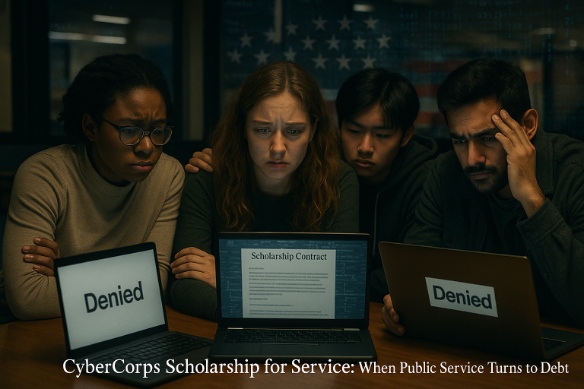

A Dream Deferred: The Shattering of CyberCorps Scholarship Promises
Picture this: A brilliant young coder, eyes lit with the fire of public service, signs on for the CyberCorps Scholarship for Service—trading tuition-free education for a pledge to safeguard the nation’s digital frontiers. Fast forward to today, October 31, 2025, and that dream curdles into dread. Over 200 CyberCorps Scholarship for Service students, handpicked to become the government’s cyber warriors, now stare down the barrel of six-figure debts as federal hiring freezes and slashed budgets yank away the jobs they were promised.
This isn’t bureaucratic fine print; it’s a human crisis unfolding in dorm rooms and jobless inboxes. One master’s student, voice cracking in an interview, confessed: “I feel like I’ve put my future in jeopardy, my entire future, and I’ve risked lifelong debt because of the whims of someone else.” For these scholars, the CyberCorps Scholarship for Service—once a beacon of opportunity—has become a trapdoor to financial ruin.
The Human Toll: From Patriotism to Panic in America’s Cyber Talent Pipeline
At the heart of this scandal are lives upended, futures fractured by a system that lured them in with guarantees now gone awry. Since 2000, the CyberCorps Scholarship for Service has funneled 4,000 to 5,000 graduates into federal cybersecurity roles, covering tuition, stipends, and even security clearances to fast-track “tailored, ready cyber warriors,” as program architect Mark Montgomery puts it.
But for current cohorts, the betrayal stings deepest. Students like those in the informal group of over 200 affected participants recount rescinded job offers—springtime dreams of DHS placements evaporating overnight—and internships pulled at the last minute. “I am less optimistic about working for the government now than I was before,” one shared, their passion for public service curdled by endless virtual job fairs that deliver more frustration than fits.
Communities of color and first-generation scholars, often drawn by the program’s equity promise, bear outsized scars. Without federal gigs, they face an 18-month clock ticking toward loan conversion, saddling them with debts that could span lifetimes. Elders in their networks whisper warnings of similar federal letdowns, while peers pivot to private sector temptations—higher pay, yes, but at the cost of broken oaths and lingering guilt.
Internship Nightmares: Reassigned and Resentful
Even those who land spots aren’t safe. Reports flood in of interns shunted to non-cyber tasks, like immigration processing, far from the firewalls they trained to defend. It’s a quiet erosion of trust, turning eager recruits into wary survivors.
Facts and Figures: The Stark Math of the CyberCorps Scholarship Debacle
The numbers tell a tale of systemic shortfall. The Trump administration’s fiscal year 2026 budget slashes CyberCorps funding by 65%, per official documents, amid broader Department of Government Efficiency (DOGE) edicts imposing hiring freezes across agencies. This isn’t isolated; it compounds a national cybersecurity workforce gap of 500,000 unfilled jobs, as tallied by the Business Software Alliance.
- Scholarship Scale: Awards often exceed $100,000 per student, including tuition, living stipends, and internships.
- Affected Cohort: 200+ current participants at risk, with many hitting the 18-month repayment deadline soon.
- Program Legacy: 4,000–5,000 alumni since 2000, jointly stewarded by the National Science Foundation (NSF) and Office of Personnel Management (OPM).
- Job Fair Fiasco: Canceled events in January and October 2025, plus a September fair stocked with agencies offering zero cyber openings.
NSF stonewalled comments amid a government shutdown, while OPM went silent—leaving students in the lurch with platitudes like “get creative in your search.”
Broader Context: Echoes of Workforce Woes in a Digital Age
This rug-pull ripples beyond campuses, exposing fractures in America’s cyber defenses long in the making. Born from a 1998 presidential push to plug federal talent gaps, CyberCorps Scholarship for Service was a bipartisan win—until now. It mirrors wider federal retrenchments, from past shutdowns that stalled hires to today’s efficiency drives that prioritize cuts over continuity.
Experts like Nick Leiserson of the Institute for Security and Technology decry a “shaken” trust: “It wasn’t really a concern that people would be able to land a job and pay back their debt… And now that has been shaken.” Henry Young of the Business Software Alliance calls for holistic fixes—K-12 pipelines, industry ties—warning that without them, the U.S. risks ceding ground in a world where cyber threats know no borders.
Historically, programs like this have spurred booms; think post-Sputnik STEM surges. Yet equity gaps persist: Women and minorities, vital to diverse defenses, are hit hardest by such volatility, perpetuating a field that’s 80% male and overwhelmingly white.
What Lies Ahead: Forging Paths from the Rubble of CyberCorps Scholarship Promises
Silver linings flicker amid the storm. Rep. Bennie Thompson brands it a “bait-and-switch where everyone loses,” urging the administration to restore funding and prioritize cyber recruitment—potentially unlocking congressional appropriations to reverse DOGE damage. Students push for waivers on repayments for the jobless, or tying scholarships to confirmed placements.
Resilience blooms in their ranks: Some eye Ph.D. extensions or research exceptions to buy time; others, military routes as a last resort. Globally, allies like the UK’s National Cyber Security Centre offer models—stable funding paired with private-sector bridges. For U.S. scholars, adaptation means advocacy: Petitions swell, alumni networks mobilize, turning pain into policy pressure.
Policy Pivots: From Cuts to Cyber Resilience
Broader lessons? Invest in talent pipelines that weather fiscal winds, blending federal commitment with flexible service options. As Montgomery notes, Congress could step in, ensuring CyberCorps evolves into a bulwark, not a broken promise.
A Reckoning for the Guardians: Rebuilding Trust in the CyberCorps Scholarship for Service
In the quiet hours after another fruitless application, these students—once wide-eyed patriots—grapple with a government that called them to serve, then slammed the door. The CyberCorps Scholarship for Service crisis isn’t just about dollars; it’s a gut-punch to the ideal of public duty in our hyper-connected era. Yet in their unbowed resolve, hope endures. As Thompson warns, the stakes are “decades-long”—for the scholars, for national security, for us all. Will Washington listen? The firewalls of tomorrow depend on it.