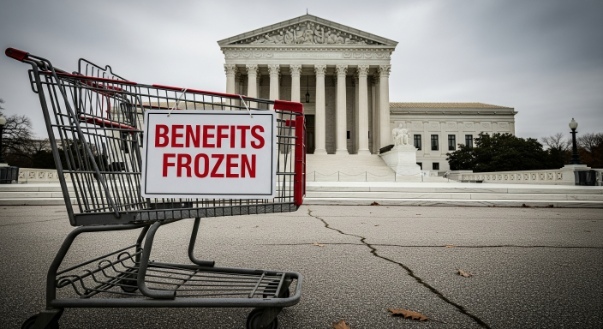

The Supreme Court SNAP decision has dealt a significant blow to the nation’s poorest households, as the high court temporarily froze a lower court order that would have boosted food stamp payments. The ruling, which came in response to an emergency request from the Trump administration, halts a mandate that was designed to provide maximum benefits to those most in need during the ongoing economic crisis. This Supreme Court SNAP intervention leaves millions of low-income families in a state of uncertainty, pausing critical aid that many depend on for daily survival.
Poorest Families Left Behind by COVID-19 Relief Loophole
The legal battle stems from a COVID-19 relief law intended to help families afford groceries. The law allowed states to issue emergency allotments to bring every SNAP recipient’s monthly benefit up to the maximum amount. However, this created a cruel loophole: families already so poor that they qualified for the maximum benefit received no additional aid. The lawsuit, originally filed by two low-income Pennsylvania residents, argued this interpretation was unfair. A federal judge agreed, but the Supreme Court SNAP decision has now put that victory on hold.
Justice Sotomayor Warns of “Irreparable Harm”
In a powerful dissent, Justice Sonia Sotomayor argued against the court’s decision to freeze the aid. She wrote that blocking the payments would cause “irreparable harm” to the very households most desperately in need of assistance. Her dissent highlighted the severe consequences for families struggling with food insecurity, stating that the court’s action forces them to continue making impossible choices between paying for rent, utilities, or putting food on the table.
The Scale of the Impact: What the Data Reveals
The administration’s policy and the subsequent Supreme Court SNAP ruling affect a significant portion of the program’s recipients. The decision impacts the lowest-income households, who were left out of the emergency aid distribution.
- The Core Issue: The Trump administration’s policy provided extra benefits only to households that were not already receiving the maximum SNAP payment.
- Affected Population: This left approximately 40% of all SNAP households—the very poorest—with no increase in aid.
- The Lawsuit’s Goal: The original lawsuit sought to compel the administration to provide a minimum of $95 per month in additional aid to these families, as intended by subsequent congressional action.
- The Court’s Action: The Supreme Court’s stay means this extra payment remains blocked while the legal case proceeds.
A Legal Battle Over Congressional Intent
The Trump administration argued that complying with the lower court’s order would be administratively burdensome and costly. They defended their interpretation of the relief law, stating it was a reasonable approach to distributing aid. However, opponents and the lower courts found that this interpretation defied the clear intent of Congress, which was to provide additional food assistance to all recipients during a national emergency. This legal fight over food stamp payments exposes the deep divide on how to execute relief efforts and protect the nation’s most vulnerable.
What’s Next for Struggling Families?
With the Supreme Court’s freeze in place, the case will continue to move through the legal system, but the timeline is uncertain. For now, the poorest SNAP recipients will not receive the additional aid mandated by the lower court. This leaves millions of families facing continued hardship as food prices rise and the economic recovery remains uneven. The future of this critical aid now rests on the final outcome of a prolonged legal battle, leaving the families at the heart of the Supreme Court SNAP case in a painful state of limbo.
Conclusion
The Supreme Court’s decision to halt increased SNAP benefits is a stark reminder of the immense challenges facing low-income Americans. While the legal arguments are complex, the human impact is simple: the poorest families are being denied aid that a lower court determined they rightfully deserve. The Supreme Court SNAP ruling has paused, but not ended, this critical fight for food security. As the case continues, the well-being of millions hangs in the balance, highlighting the profound disconnect between policy interpretation and the urgent reality of hunger in America.