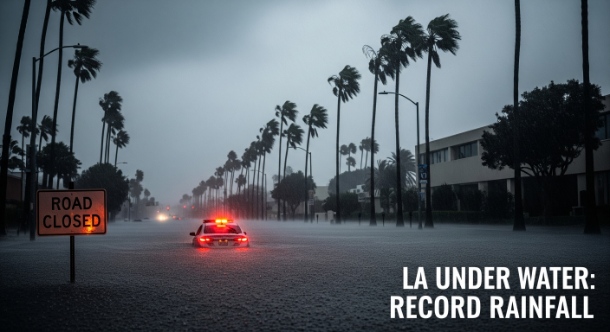

Record rainfall Los Angeles has brought the City of Angels to a standstill this week, shattering historical weather data for November. An unseasonal and relentless atmospheric river parked itself over Southern California, dumping months’ worth of precipitation in a matter of hours. As emergency crews scramble to clear debris and rescue stranded motorists, the record rainfall Los Angeles event is forcing residents to confront a harsh new climate reality: the “rainy season” is no longer predictable.
Chaos on the Coast: Santa Monica & Malibu Battered
The storm didn’t just bring water; it brought destruction to the region’s most iconic coastlines. For residents in Santa Monica and Malibu, the deluge transformed scenic routes into dangerous obstacle courses.
- PCH Shutdown: The Pacific Coast Highway was forced to close in both directions near Topanga Canyon after mudslides buried the roadway, trapping dozens of vehicles in a sea of mud and rocks.
- Unhoused Crisis: In Santa Monica, the sudden downpour created a humanitarian emergency. Local shelters were overwhelmed as unhoused residents sought refuge from the freezing torrents that flooded parks and underpasses.
- Pier Under Pressure: Storm surges combined with high tides battered the Santa Monica Pier, forcing a temporary closure of the lower decks as waves breached the breakwater.
Valley Commuters Trapped
In the San Fernando Valley, the situation was equally dire. Major arteries, including the 405 and the 101 freeways, saw portions of the road submerged due to clogged drainage systems. “I’ve lived here for twenty years and I’ve never seen the freeway turn into a river this fast,” said Miguel Santos, a commuter stuck near Sherman Oaks for four hours.
The Scale of the Deluge: A November Anomaly
The record rainfall Los Angeles experienced this week is statistically shocking. Usually, such potent storms are reserved for January or February, making this November event a disturbing outlier.
- 25% in 48 Hours: Meteorologists confirm that the basin received nearly one-quarter of its average yearly rainfall in just two days.
- Downtown Records Broken: Downtown LA recorded over 4 inches of rain, obliterating the previous daily record set in the early 20th century.
- Reservoir Spikes: While the rain offers critical drought relief, the intensity overwhelmed local catch basins, causing millions of gallons of untreated stormwater to flush into the Santa Monica Bay.
Climate Context: The New “Wet” Normal?
Experts point to this record rainfall Los Angeles event as a textbook example of climate whiplash. The region is swinging violently from extreme heat to extreme flooding, stressing infrastructure designed for a milder era.
- Warmer Oceans: Unusually warm Pacific waters fueled the atmospheric river, pumping more moisture into the storm system than typical winter fronts.
- Infrastructure Failure: The city’s concrete-heavy landscape, particularly in the San Fernando Valley, prevented natural absorption, turning streets into flash-flood zones instantly.
- Fire and Flood: Areas recently scarred by summer wildfires were the first to slide, proving the deadly connection between the city’s fire season and its flood season.
Recovery and Resilience
As the skies finally clear, the cleanup begins. The Department of Water and Power works to restore electricity to thousands of homes left in the dark, while Caltrans crews bulldoze mud off the highways.
- Cleanup Operations: Street sweepers are out in force across Santa Monica, clearing storm drains clogged with palm fronds and debris.
- Future Proofing: City officials are already facing pressure to accelerate “sponge city” projects—parks and permeable pavements designed to capture this precious water rather than letting it destroy homes.
- Community Spirit: Despite the chaos, stories of neighbors helping neighbors—clearing drains and sharing sandbags—highlight the resilience of Angelenos in the face of disaster.
CONCLUSION
This record rainfall Los Angeles event serves as a stark wake-up call for Southern California. While the immediate danger is passing, the intensity of this November storm signals a volatile future for the region’s weather. As the city dries out, the question remains: is Los Angeles infrastructure ready for the next atmospheric river, or was this just a preview of a wetter, wilder winter?