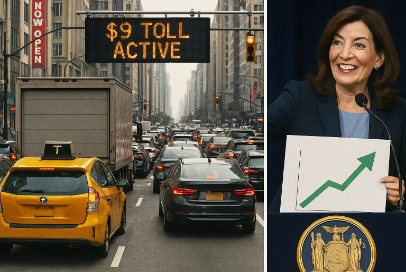

A sharp divide has emerged on the streets of Manhattan as officials celebrate the early results of the new toll, while motorists claim the reality is far from the picture being painted.
Governor Kathy Hochul and the Metropolitan Transportation Authority (MTA) are taking an early victory lap, declaring that the controversial NYC congestion pricing program has successfully unclogged Manhattan’s arteries. In a recent press briefing, officials hailed the initiative as a triumph for urban planning, citing faster speeds and fewer cars. However, the view from the dashboard tells a starkly different story, as frustrated commuters insist the gridlock is as bad as ever—only now, it comes with a price tag.
“Paying to Park”: Drivers Dispute the Win
For the everyday driver navigating Midtown, the official optimism feels like a disconnect from reality. Commuters, delivery drivers, and cabbies are voicing intense frustration, arguing that the NYC congestion pricing fee has done little to actually speed up their journeys.
Interviews with motorists reveal a sense of resentment. Many describe the experience as “paying to park” on the avenues. The prevailing sentiment on the street is that while the toll gantries are successfully collecting money, the promised open roads remain a fantasy. Drivers argue that construction, double-parked delivery trucks, and bike lanes are the real causes of bottlenecks, none of which are solved by charging a toll.
The Working Class Squeeze
The anger is particularly acute among trade workers and delivery drivers who cannot take the subway. For them, the toll is not a behavioral nudge to switch modes of transport; it is an unavoidable tax on their livelihood. Stories are emerging of small business owners absorbing the cost, further straining their margins in an already expensive city.
MTA’s Data: The Official Success Story
Despite the anecdotal backlash, the MTA is standing firm on its data. Officials presented statistics suggesting a tangible drop in traffic volume entering the Central Business District. According to their metrics, the NYC congestion pricing plan is working exactly as designed.
MTA Chair Janno Lieber and Governor Hochul emphasized that the reduction in vehicles is not just about speed, but about air quality and funding mass transit. They argue that the “adjustment period” is still ongoing and that the visual reduction in cars is supported by sensor data, even if individual drivers feel stuck in specific hotspots.
The Disconnect: Perception vs. Averages
Why is there such a massive gap between the official data and driver perception? Experts suggest it comes down to “localized gridlock.” While the total number of cars entering Manhattan may have dropped, key choke points—like the approaches to the Lincoln Tunnel or the FDR Drive—remain heavily congested.
For a driver stuck at a single intersection for three light cycles, the statistic that “overall volume is down 10%” is meaningless. This disconnect poses a political risk for Hochul, who must balance the long-term benefits of transit funding against the immediate, visceral anger of the motoring public.
What Lies Ahead for Commuters?
As the winter season progresses, the scrutiny on NYC congestion pricing will only intensify. The revenue generated is slated to fix the aging subway system, a benefit that will take years to materialize. In the interim, the battle for the narrative continues.
The state government is urging patience, promising that traffic patterns will normalize as drivers adjust their habits. However, for the driver currently sitting in bumper-to-bumper traffic on 42nd Street, patience is running as low as their fuel gauge.
Conclusion
The rollout of NYC congestion pricing has proven to be as polarizing in practice as it was in theory. While Governor Hochul and the MTA have the data to claim a policy win, they have yet to win over the hearts—and wallets—of the drivers. As the city adapts to this new economic reality, the true measure of success will be whether the revenue eventually leads to a transit system good enough to make driving unnecessary.