
New revelations have shattered the “fog of war” defense as sources confirm military officials were aware of survivors before launching a deadly second Pentagon drug boat strike.
In a damning development that has intensified the scrutiny on the Department of Defense, new reports indicate that the fatal Pentagon drug boat strike in the Caribbean was a calculated decision made with full situational awareness. According to emerging details, military commanders reportedly knew there were survivors clinging to the wreckage of an initial blast on September 2, yet proceeded to order a follow-up airstrike. This explosive disclosure directly contradicts earlier claims of ignorance, placing Defense Secretary Pete Hegseth in the center of a political and legal firestorm.
The September 2 Incident: A “Double-Tap” Exposed
The incident, which resulted in the deaths of 11 people, involved a US military operation against a vessel suspected of trafficking narcotics. While the initial engagement disabled the boat, it is the subsequent actions that have triggered a crisis in Washington.
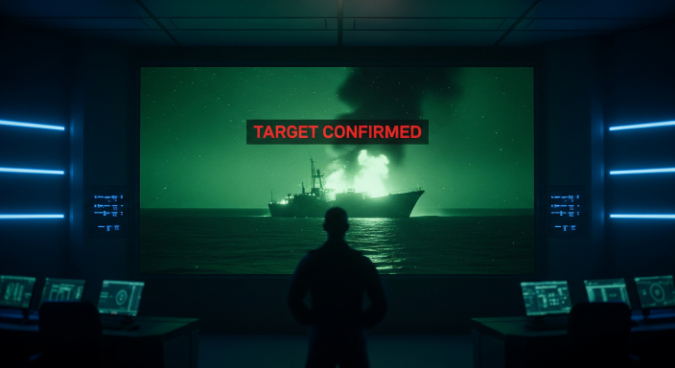
Sources close to the investigation allege that surveillance feeds provided visual confirmation of survivors in the water following the first hit. Despite this, a second strike—militarily known as a double-tap—was authorized. While the administration has framed the operation as a necessary measure to eliminate a “narco-terrorist” threat to the United States, legal experts warn that targeting shipwrecked survivors violates fundamental international laws and could constitute a war crime.
The “Fog of War” Defense Crumbles
Defense Secretary Pete Hegseth has vigorously defended the operation in recent days, citing the “fog of war” to explain the command decisions. In high-level Cabinet meetings, Hegseth insisted that the chaotic environment of fire and smoke obscured the presence of survivors, portraying the second strike as a standard procedure to ensure the destruction of the illicit cargo.
However, the latest leaks suggest a stark disconnect between the public narrative and the operational reality. If commanders had real-time intelligence showing survivors, the “fog of war” justification becomes legally perilous. Lawmakers are now demanding to know exactly what was visible on the monitors in the command center and who gave the final order to fire.
Admiral Bradley Under the Microscope
At the center of this command chain is Admiral Frank “Mitch” Bradley. The White House has confirmed that Bradley, operating under broad authorities to combat drug trafficking, directed the engagement.
While the administration stands by Bradley, stating he made the difficult call to protect American interests, the confirmation that the Pentagon drug boat strike targeted known survivors complicates his defense. Congressional oversight committees are expected to grill military leadership on whether the order was a standing directive for total elimination or a specific, situational command.
Legal Fallout: War Crimes or Border Security?
The controversy has ignited a fierce debate between national security hawks and human rights advocates. The current administration argues that the US is in an armed conflict with drug cartels, justifying lethal force against combatants.
Conversely, legal scholars point out that even in armed conflict, the laws of war prohibit attacking combatants who are hors de combat—out of the fight due to injury or shipwreck. The revelation that the Pentagon drug boat strike was a deliberate action against defenseless individuals could open US officials to international legal challenges and deepen the rift within Congress.
Conclusion
As the investigation into the Pentagon drug boat strike unfolds, the distinction between aggressive border enforcement and extrajudicial killing is becoming dangerously blurred. With a classified Congressional briefing scheduled, the coming days will be critical. The American public deserves to know whether this was a tragic mistake born of chaos, or a policy that has silently erased the red lines of military conduct.