
As 2025 draws to a close, the geopolitical landscape of Eastern Europe stands on a knife’s edge. A controversial and high-stakes Ukraine peace deal is currently being hammered out, driven by the aggressive diplomatic maneuvering of the Trump administration. The Atlantic reports that Washington has shifted from “as long as it takes” to “as soon as possible,” placing immense pressure on Kyiv to accept a ceasefire that could freeze the conflict—and the front lines—in place.
“The Art of the Truce”: Trump’s Ultimatum
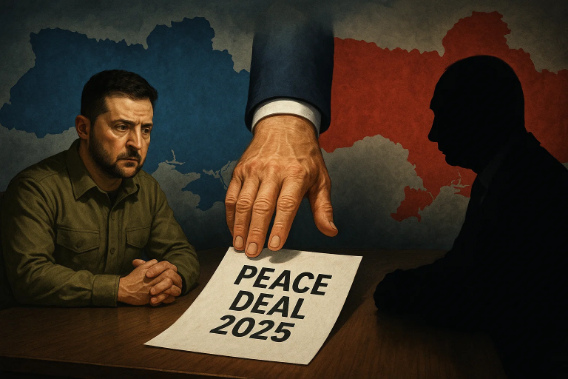
President Trump’s return to the world stage has been defined by his promise to end the war, and he is now calling in his chips. Sources indicate that the proposed Ukraine peace deal is being presented not as a request, but as a necessity. The administration has reportedly signaled that continued American military assistance is contingent upon President Volodymyr Zelensky’s willingness to negotiate.
For Zelensky, this is a diplomatic vice. He is caught between a weary population that yearns for safety and a staunch nationalist contingent that views any concession of territory to Russia as treason. The Atlantic describes the atmosphere in Kyiv as “grimly pragmatic,” as officials realize that without U.S. backing, the war effort could collapse entirely.
The Proposed Terms
While official details remain guarded, leaks suggest the framework involves a “freeze-in-place” scenario.
- Territorial Control: Russia would likely retain de facto control over currently occupied territories in the Donbas and Crimea.
- NATO Neutrality: Ukraine would agree to a long-term moratorium on joining NATO, a key demand of Vladimir Putin.
- Security Guarantees: In exchange, the West would provide “Israel-style” security guarantees and heavy weaponry to deter future aggression.
The Scale of Devastation: Why Peace is Urgent
The push for a Ukraine peace deal comes after years of grinding attrition that has devastated a generation. The sheer human and economic toll has created a grim backdrop that makes even a flawed peace look appealing to some international observers.
The war’s toll by late 2025:
- Hundreds of Thousands of Casualties: Both sides have suffered catastrophic losses, depleting manpower reserves.
- Infrastructure Ruin: Ukraine’s energy grid and industrial base remain in critical condition heading into another winter.
- Economic Exhaustion: Western allies face “donor fatigue,” with domestic populations in Europe and the U.S. growing resistant to further funding.
Trump’s team argues that the stalemate creates a “meat grinder” that serves no one, and that stopping the killing is the moral priority, even if the political terms are bitter.
Zelensky’s Dilemma: Land for Peace?
The core of the Ukraine peace deal rests on the most painful question of the war: Land for peace. For three years, “territorial integrity” was the non-negotiable red line. Now, that line is blurring under American pressure.
Critics argue that freezing the lines now rewards aggression and allows Russia to regroup for a future offensive. However, proponents of the deal argue that saving the sovereign state of Ukraine—even with reduced borders—is a victory in itself against a superpower. The Atlantic notes that Zelensky’s rhetoric has subtly shifted, focusing more on “security” and “survival” rather than “total victory,” signaling a preparation for a difficult compromise.
Global Reactions: Europe on Edge
European leaders are watching with bated breath. While some nations, like Hungary, applaud the move toward de-escalation, Baltic and Polish allies fear that a concessionary peace will only embolden Moscow. The fracture in the Western alliance is exactly what Putin has waited for, and Trump’s unilateral push is forcing Europe to decide whether to fall in line or attempt to fund the war alone.
Forward-Looking: A New Cold Peace?
If the Ukraine peace deal is signed, it will likely mark the beginning of a “Cold Peace” in Europe. The border would remain heavily militarized, sanctions on Russia would likely persist, and Ukraine would begin the long road of reconstruction.
The coming weeks are critical. With the Trump administration looking for a foreign policy win before the new year, the diplomatic channels between Washington, Kyiv, and Moscow are burning hot. The world waits to see if the pen can finally stop the sword, or if this push will fracture the Ukrainian resistance.
Conclusion
The proposed Ukraine peace deal represents the most significant diplomatic gamble of the decade. By forcing the issue, President Trump is betting his legacy on stopping the bloodshed, even at the cost of Ukrainian territory. As Zelensky weighs his limited options, the outcome of these negotiations will define the future of European security and the global order for generations to come.