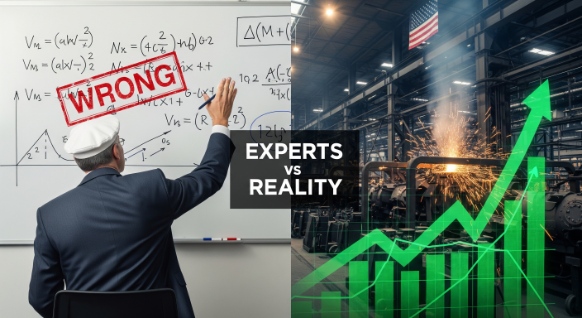

In a stunning rebuke of mainstream economic orthodoxy, new analysis reveals that the Trump tariffs have defied the doomsday predictions of the global elite. For years, the so-called experts warned that protectionist trade policies would crash the economy, skyrocket inflation, and destroy jobs. Yet, the data tells a different, vindicated story. As the US economy demonstrates resilience, the failure of traditional economic models has been fully exposed, raising critical questions about who really understands the pulse of American industry.
16 Nobel Laureates Wrong: The Data Defies Doom
The narrative was set in stone: tariffs are bad. A letter signed by 16 Nobel laureates famously warned that Trump tariffs would lead to higher inflation and economic ruin.[1] They claimed that engaging in trade wars, particularly with China, would result in immediate job losses.[1]
However, reality has dismantled these academic theories. The data is undeniable:
- Following the 2018 tariff implementation, unemployment did not spike; it fell from 3.9% to 3.7%.[1]
- Inflation during the tariff onset remained low, only rising later due to pandemic-era spending—not trade policy.
- Even as the Biden administration maintained these tariffs, the predicted “economic collapse” never materialized.
This disconnect suggests a “shocking” blind spot in the traditional economic consensus. The experts relied on standard models that prioritize global integration over national resilience, failing to account for the robustness of the American internal market.
Flawed Models and Broken Promises
Why were the experts so wrong? The answer lies in the tools they use. Most mainstream economists rely on the GTAP (Global Trade Analysis Project) model, which critics argue has a built-in bias toward free trade.[1] Analysts have pointed out that these models have “essentially zero predictive accuracy” in real-world scenarios.[1] By assuming that a global “equilibrium” is always the goal, these models fail to capture the strategic benefits of Trump tariffs, such as increased domestic investment and the leverage gained in international negotiations.
The Strategic Win: Leverage Over Rivals
Beyond the raw economic data, the Trump tariffs proved to be a masterstroke in geopolitical strategy. Critics argued that retaliatory tariffs from China and the EU would cripple US exports. While agricultural exports faced initial headwinds, the long-term result was increased leverage.
- Steel & Aluminum: The tariffs forced competitors to the table, leading to agreements that protected US industries from being flooded by cheap imports.
- Supply Chain Security: The policies initiated a necessary decoupling from China, encouraging companies to diversify supply chains—a move that proved critical during global disruptions.
- Export Recovery: Sectors like soy and other commodities saw exports rebound and break records within two years, debunking the myth of permanent damage.
A New Economic Era: 3.3 Million Jobs Projected[1]
Looking forward, the potential of a continued or expanded Trump tariffs policy paints a bright picture for American labor.[1] Alternative modeling by the Coalition for a Prosperous America (CPA) suggests that a universal tariff strategy could be a massive engine for growth.
The CPA model projects:
- 3.3 million new jobs created as manufacturing returns home.
- $460.3 billion in new federal tax revenue annually.[1]
- 3.6% increase in real GDP.[1]
- $8,000 rise in real household incomes.[1]
This revenue could theoretically be used to slash income taxes, shifting the tax burden from American workers to foreign producers—a populist economic shift that turns traditional policy on its head.
CONCLUSION
The debate is settled: the Trump tariffs were not the disaster the “experts” promised. Instead, they have been vindicated as a powerful tool for national sovereignty and economic strength. As the US moves forward, it is clear that the old models of globalization are obsolete. The failure of the 16 Nobel laureates serves as a reminder that economic health is measured not in academic papers, but in the factories, paychecks, and prosperity of the American people.