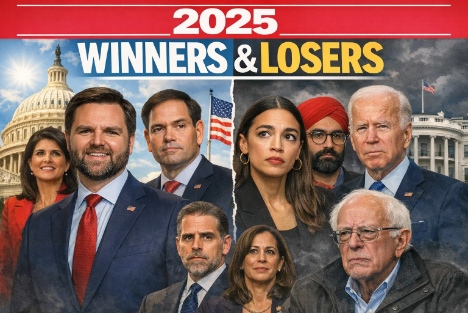

The winners and losers 2025 politics landscape was dominated by a pivotal year in U.S. government and opposition movements as President Donald Trump reclaimed the presidency and installed a new political order, influencing both parties’ futures. Trump’s allies rose to prominence while many experienced lawmakers and officials struggled to adapt or maintain influence under his agenda. From rising stars like JD Vance and Zohran Mamdani to figures whose careers slid amid controversy or strategy missteps, the political tides in 2025 underscored major shifts in strategy, power, and public perception. Here’s our breakdown of the year’s biggest winners and losers.
Winners — Trump Allies and Rising Democratic Stars
Winners and losers 2025 politics saw sharp contrasts between emerging leaders and fading establishment figures. At the top of the winners list was JD Vance, who transformed from freshman senator to vice president, proving indispensable in Trump’s administration with a versatile political role. Marco Rubio made a compelling comeback as a top advisor on foreign policy, gaining strategic influence within the White House. Karoline Leavitt, at just 27, made history as the youngest White House press secretary, turning daily briefings into focused messaging battles that energized the MAGA base.
Democratic Figures Who Gained Momentum
Not all the winners belonged to the Republican camp — key voices emerged on the Democratic side too. Alexandria Ocasio-Cortez amplified progressive energy, campaigning nationwide and shaping opposition narratives despite setbacks in committee leadership. Meanwhile, Zohran Mamdani delivered a surprise mayoral victory in New York City, energizing immigrant communities with a bold platform focused on affordability and turnout strategy. Their gains reflected a broader appetite for dynamic leadership within the Democratic Party.
Losers — Missteps, Security Scandals, and Leadership Struggles
On the flip side of the winners and losers 2025 politics ledger were several figures whose influence waned. Dan Bongino’s tenure as FBI deputy director ended in resignation amid internal disarray and bipartisan ridicule. Kash Patel similarly struggled to command respect as FBI director amidst internal dissent. Pete Hegseth, as Defense Secretary, faced controversy after operational missteps and public disputes over military decisions that drew bipartisan criticism. Mike Waltz’s early national security adviser role faltered after security leaks undermined his position and led to his reassignment.
Institutional Losers — Democratic Leadership Under Scrutiny
Democratic leaders also figured prominently among the losers in 2025. Hakeem Jeffries, House Minority Leader, struggled to unify his party and struggled with progressive dissatisfaction, despite tactical wins later in the year. Chuck Schumer, Senate Minority Leader, faced growing criticism from progressives who viewed his cautious tactics as detached from the party’s energy base. While these leaders maintained formal authority, their influence over the Democratic agenda appeared diminished in the face of emerging voices with clearer, more confrontational messaging.
What This Reveals About 2025 Politics
The winners and losers 2025 politics narrative underscored a broader theme of change: established figures faced challenges from both ends of the political spectrum — Trump loyalists reshaping Republican strategy and bold Democratic progressives redefining opposition energy. This dynamic year highlighted how political influence can pivot rapidly in response to leadership style, public engagement, and internal party cohesion. Analysts note that 2025’s outcomes could set the stage for evolving party identities and strategies leading into future election cycles.
Conclusion
In reviewing the winners and losers 2025 politics, one thing is certain: the political landscape shifted dramatically as new power players emerged and longstanding leaders confronted new dynamics. From JD Vance’s rise to vice presidency and Zohran Mamdani’s unexpected mayoral victory, to setbacks for figures like Dan Bongino and institutional leaders like Hakeem Jeffries, 2025 highlighted the volatility and opportunity inherent in American politics. These developments not only shaped the year just passed but also offer a lens into strategic shifts that could resonate in party strategies and voter preferences for years to come.