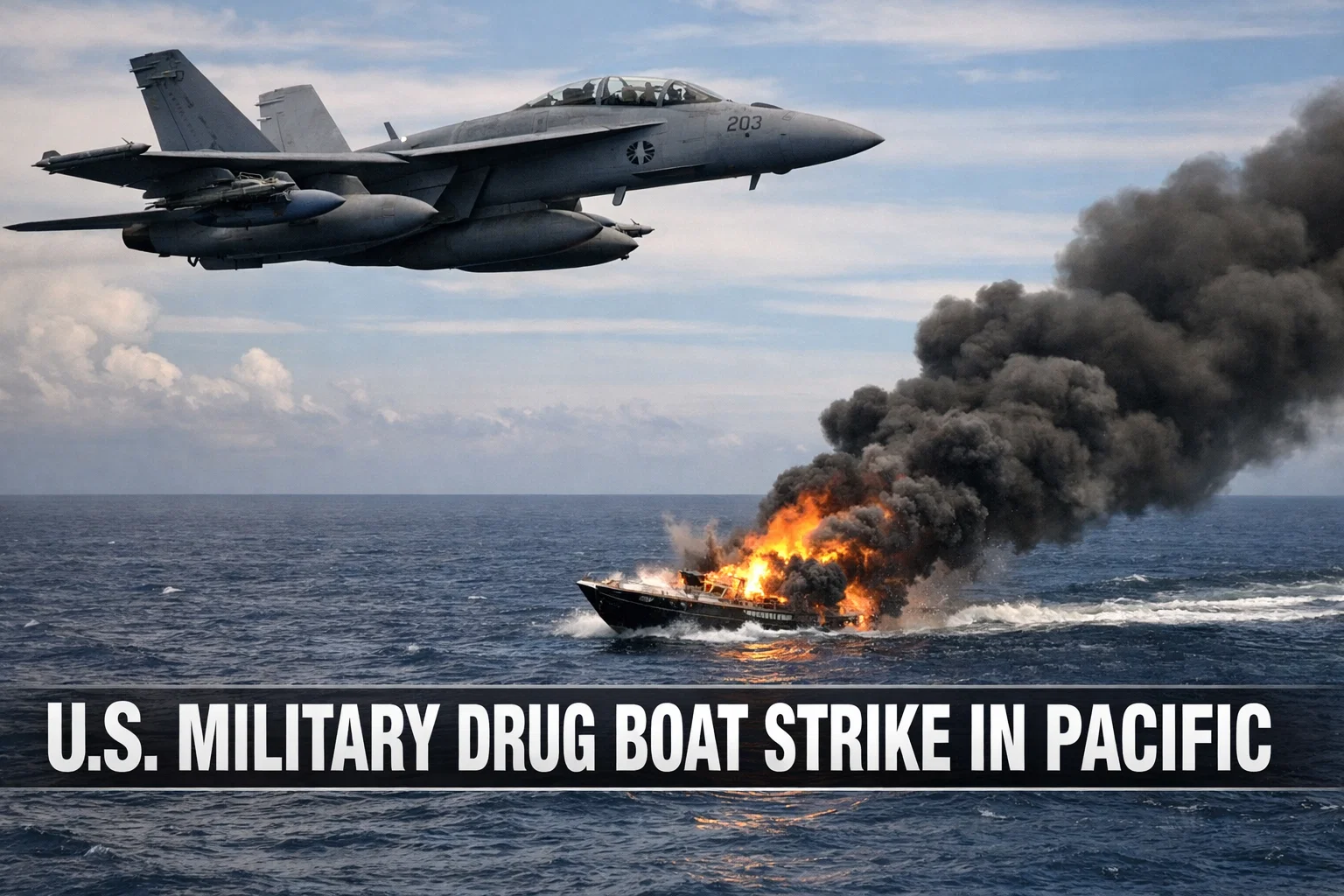
The U.S. military drug boat strikes campaign has escalated once again with another controversial strike in the eastern Pacific Ocean, where American forces killed at least one person after targeting a vessel suspected of involvement in narcotics trafficking. This latest operation is part of a months-long series of military actions under the Trump administration’s counter-drug strategy, which has expanded beyond the Caribbean into Pacific waters. While the White House insists these strikes are necessary to curb drug flows and designate targeted groups as terrorist organizations, critics argue the legal basis and human cost of these operations warrant intense scrutiny.
Latest Strike in Eastern Pacific Kills at Least One
In the most recent U.S. military drug boat strikes, Joint Task Force Southern Command reported Monday that a low-profile vessel was struck in the eastern Pacific after intelligence suggested narcotics trafficking activity. One person was killed in the operation, and no U.S. personnel were harmed, according to the announcement shared on social media. Officials described the targeted vessel as traversing known narcotics routes and operated by groups tagged by the U.S. as designated terrorist organizations.
This strike continues a pattern of lethal engagements at sea that have drawn both domestic political debate and questions about evidence disclosure, operational transparency, and international norms.
Pacific Boat Attacks — High Fatalities and Repeated Operations
This Pacific strike is not an isolated event. In a recent operation, U.S. forces attacked three boats in the eastern Pacific, resulting in eight deaths across multiple vessels. These strikes occurred amidst growing congressional scrutiny about the use of lethal force, evidence standards, and authority for such missions.
The Broader Campaign — Numbers and Context
Here’s a snapshot of the U.S. military drug boat strikes pattern:
- Multiple attacks on suspected drug-smuggling vessels in the eastern Pacific and Caribbean Seas since September 2025.
- The administration has reported over 100 fatalities from these operations.
- Recent strikes killed 8 people in one multi-boat attack, drawing fresh political scrutiny.
- The military identifies some targeted groups as “designated terrorist organizations,” though evidence of drug cargo is often not shown.
- Lawmakers from both parties in the U.S. Congress are increasingly calling for oversight and clearer legal grounding.
These engagements form part of what the Pentagon frames as an armed conflict against narcotics networks, a designation that has legal implications for how the U.S. justifies use of force internationally.
Why This Matters — Strategy and Scrutiny
The escalation of U.S. military drug boat strikes signals a shift in counter-narcotics policy from law enforcement to military engagement. The Trump administration has argued that conventional interdiction efforts are insufficient against sophisticated cartel operations, hence using naval and airstrike capability in international waters. However, the increasing death toll — including incidents where follow-on strikes killed survivors clinging to wreckage — has triggered bipartisan concern in Congress over the legality of such missions and whether military force is the appropriate tool for combating drug trafficking. AP News
Human rights advocates and legal experts also warn that lethal strikes without transparent evidence of narcotics trafficking and affiliation to terrorist groups may constitute extrajudicial killings under international law.
International and Domestic Reactions
Internationally, countries in Latin America have expressed unease over U.S. naval operations in Pacific and Caribbean waters, especially when evidence is not publicly disclosed and civilian casualties are alleged. Domestically, lawmakers have introduced measures to review or limit the administration’s authority to carry out such strikes without explicit congressional approval. These debates reflect deeper tensions over executive power, military engagement, and ethical boundaries in the war on drugs.
What’s Next — Oversight and Policy Debate
As U.S. military drug boat strikes continue, the political and legal discourse in Washington shows signs of intensifying. Members of Congress are pushing for briefings, evidence disclosures, and clear rules of engagement that align with U.S. and international law. Defense Department officials have resisted releasing full unedited videos of past strikes, citing national security, but this has only deepened calls for oversight and accountability.
Observers note that the strikes’ expansion to the Pacific underscores strategic priorities but also raises questions about whether military force can effectively address transnational narcotics trafficking without broader diplomatic and economic strategies.
Conclusion
The latest U.S. military drug boat strikes off the Pacific coast marks both a continuation and escalation of the Trump administration’s controversial military campaign against alleged drug smuggling vessels. While officials frame the operations as necessary to disrupt narcotics flows and label some targets as terrorist affiliates, the mounting fatality count, lack of transparent evidence, and legal questions have triggered significant domestic political debate and international unease. As these actions evolve, clarity on legal authority, oversight, and humanitarian considerations will remain central to how policymakers, allies, and critics assess this expanding strategic initiative.