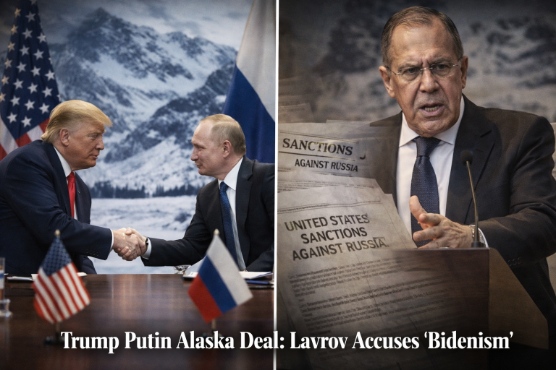

Trump Putin Alaska deal, forged in a high-stakes August 2025 summit in Anchorage, is unraveling amid sharp Russian criticism, leaving hopes for Ukraine peace in jeopardy. Russian Foreign Minister Sergei Lavrov accused U.S. President Donald Trump of betraying the “man-to-man” agreement with Vladimir Putin by extending and adding sanctions—targeting oil giants Rosneft and Lukoil—just weeks after the meeting. Labeling it “pure ‘Bidenism,'” Lavrov highlighted how sanctions persist despite promises of cooperation, pressuring partners like India to shun Russian energy. As intense Donbas fighting continues and U.S.-pushed June peace deadlines loom, this diplomatic fracture exposes deep mistrust, delaying resolution and heightening global tensions in the prolonged Russia-Ukraine war.
Broken Promises Emerge: Lavrov Slams Trump Over Trump Putin Alaska Deal Fallout
The Trump Putin Alaska deal promised a path to resolving the Ukrainian crisis through direct dialogue, yet Lavrov’s fiery TV BRICS interview reveals mounting frustration. “This is pure ‘Bidenism,’ which Trump and his team reject. Yet they calmly extended the law, and sanctions against Russia continue to operate,” Lavrov stated, pointing to new penalties on Russia’s top oil producers mere weeks after Anchorage.
Lavrov emphasized the agreement’s spirit: “In Anchorage, we accepted the U.S. proposal… If approached straightforwardly, in a man-to-man way, they proposed it and we agreed—the problem should have been resolved.” Instead, he claims the opposite unfolded—new sanctions, tanker warfare, and pressure on nations like India to abandon affordable Russian oil. This betrayal narrative resonates in Moscow, where economic strain from inflation and high rates fuels resentment. For ordinary Russians and Ukrainians, stalled talks mean prolonged suffering amid battlefield stalemates and diplomatic gridlock.
Donbas Remains Flashpoint in Stalled Negotiations
Intense fighting rages in Donbas, where Ukraine holds about a fifth of the region amid Russia’s demands for full cession. Kyiv rejects outright handover on constitutional and moral grounds, proposing ceasefires tied to referendums—ideas swiftly dismissed by Moscow. These territorial disputes, central to the Trump Putin Alaska deal discussions, now exacerbate distrust as peace efforts falter.
The Scale of Tensions: Key Facts in Trump Putin Alaska Deal Controversy
The Trump Putin Alaska deal’s unraveling highlights persistent challenges in ending the war.
- August 2025 Anchorage summit: Trump and Putin reached a “man-to-man” understanding on resolving Ukraine issues, paving way for broader cooperation.
- Sanctions extension: U.S. continued Biden-era measures (freezing reserves) and added new ones on Rosneft and Lukoil weeks post-summit.
- U.S. peace push: Proposes ending war by June, with pressure on both sides; trilateral talks set for Miami next week.
- Donbas control: Ukraine retains ~20% amid heavy fighting; Russia insists on full transfer.
- Economic impact: Russia’s war economy grapples with inflation, high rates; U.S. pressures partners to curb Russian energy imports.
These elements reveal a widening gap between summit optimism and current realities, with no breakthrough despite ongoing diplomacy.
From Anchorage Hope to Sanctions Reality: Why Trust Eroded After Trump Putin Alaska Deal
The Trump Putin Alaska deal initially sparked cautious optimism for U.S.-Russia normalization and Ukraine resolution, building on direct leader engagement absent in prior administrations. Yet Lavrov’s accusations expose underlying vulnerabilities: sanctions as leverage tool clashing with promised cooperation. Historically, U.S.-Russia ties have oscillated between confrontation and pragmatic deals, but post-2022 invasion dynamics—territorial annexations, energy weaponization—complicate progress.
Experts note U.S. coercion on global partners (e.g., India shifting to Venezuelan oil) undermines mutual benefits touted in Anchorage. Russia’s economy, reliant on energy exports, suffers disproportionately, fueling Lavrov’s narrative of betrayal. Without addressing these core issues—sanctions relief tied to verifiable peace steps—talks risk perpetual deadlock, mirroring past failed initiatives while civilians bear the war’s human cost.
Energy Pressure Amplifies Geopolitical Strain
U.S. efforts to isolate Russian oil markets heighten Moscow’s grievances, turning economic tools into perceived aggression and stalling broader cooperation envisioned post-summit.
Diplomatic Push Continues Amid Challenges: Next Steps After Trump Putin Alaska Deal Criticism
Despite Lavrov’s sharp rebuke, momentum persists. Ukrainian President Volodymyr Zelensky confirmed U.S. scheduling: “The Americans are proposing the parties end the war by the beginning of this summer… And they want a clear schedule of all events.” Kyiv has agreed to Miami trilateral talks, signaling willingness under pressure.
The U.S. aims to enforce a June deadline through incentives and leverage, potentially pressuring both Moscow and Kyiv. Russia, while critical, engages diplomatically—releasing Ukrainian POWs recently hints at selective goodwill. Long-term, rebuilding trust demands concrete actions: verifiable de-escalation, balanced sanctions relief, and inclusive territorial resolutions. Communities on both sides yearn for peace; renewed dialogue could transform Anchorage’s framework into lasting stability.
The Trump Putin Alaska deal’s promise hangs by a thread as Lavrov’s “Bidenism” charges expose fractures in high-level diplomacy. With sanctions lingering and Donbas battles raging, millions endure uncertainty in the Russia-Ukraine war. Yet ongoing talks offer a narrow path forward—urgent pressure for compromise could still honor Anchorage’s intent, fostering cooperation over confrontation and easing global anxieties. Awareness of these tensions urges support for genuine resolution efforts.