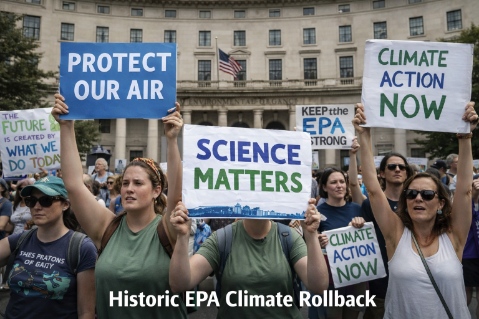
The EPA climate rollback initiated by the Trump administration has culminated in an historic and alarming shift in U.S. environmental policy as the Environmental Protection Agency formally rescinded the scientific finding central to federal climate action. The 2009 “endangerment finding” identified greenhouse gases like carbon dioxide and methane as threats to public health and welfare, providing the legal basis for regulating emissions under the Clean Air Act. With this ruling repealed, the EPA climate rollback could dismantle decades of climate safeguards affecting vehicles, power plants, and industrial pollution — igniting fierce debate among policymakers, scientists, and public health advocates about the future of climate governance in America.
Public Health and Community Concerns After EPA Climate Rollback
Environmental experts warn that the EPA climate rollback could lead to substantial increases in air pollution that affect everyday life across American communities. By ending the federal government’s legal mandate to regulate greenhouse gases, emissions from cars, factories, and power plants may go uncurbed — heightening risks for respiratory illnesses, heart disease, and other health problems linked to poor air quality.
Health professionals emphasize that vulnerable populations — including children, the elderly, and those with preexisting conditions — could face elevated exposure to pollution due to weaker federal standards. Climate advocates stress that the rollback fundamentally shifts how policymakers balance environmental protection, public health, and economic interests, prompting protests and organized responses from non-profits and community groups.
How Revoking the Endangerment Finding Reshapes Regulation
At the heart of the EPA climate rollback is the 2009 endangerment finding — a scientific and legal determination that greenhouse gases endanger public health and welfare, empowering the EPA to regulate them under the Clean Air Act. With this foundation removed:
- Federal greenhouse gas standards for cars and light trucks have been eliminated.
- Broader emissions rules for power plants and industry are now vulnerable to cancellation or weakening.
- Legal authority to issue future climate protections under the Clean Air Act is significantly undercut.
This move signals a dramatic departure from decades of science-based policymaking and positions the agency to embrace a more laissez-faire environmental stance.
The Scale of Impact: EPA Climate Rollback Data Snapshot
Here’s a clear view of how the EPA climate rollback reshapes climate policy:
- 2009 endangerment finding repealed: removed legal basis for regulating greenhouse gases under the Clean Air Act.
- Vehicle emission standards dismantled: cuts federal mandates that previously limited tailpipe pollution.
- Potential rollback of industry emissions: widening room for higher greenhouse gas output.
- Public and scientific outcry: experts warn of increased health risks and climate impacts.
By dissolving the endangerment finding, the EPA has removed a cornerstone of federal climate regulation, leaving a regulatory gap that could ripple across multiple sectors of the economy.
Why the EPA Climate Rollback Is Drawn Into Fierce Debate
Supporters of the EPA climate rollback — including President Trump and EPA Administrator Lee Zeldin — frame the repeal as an effort to reduce regulatory burden on businesses and consumers. They argue that previous laws were costly and onerous, constraining economic growth and vehicle affordability.
Trump declared the repeal the “single largest deregulatory action in U.S. history,” asserting that it restores choice and relieves what his officials describe as unnecessary constraints.
However, critics — including environmental groups, lawmakers, and scientists — view the change as a retreat from climate responsibility and a dismissal of decades of scientific evidence linking greenhouse gas emissions to climate warming and public health harm. They point to previous court affirmations, including the Supreme Court’s Massachusetts v. EPA ruling, which confirmed greenhouse gases as air pollutants regulated under the Clean Air Act.
Many advocates have pledged legal challenges and reform efforts aimed at reinstating climate protections and preserving federal authority to regulate emissions.
Economic vs. Environmental Priorities at Stake
The EPA climate rollback has reignited a broader national conversation about the balance between economic interests and environmental stewardship. Proponents argue that rolling back regulations will spur investment, lower consumer costs, and reduce compliance expenses for industry.
But environmental and health experts counter that short-term economic relief could come at the cost of long-term environmental damage, rising healthcare expenditures, and intensified climate impacts such as heat waves, flooding, and wildfires — all linked to unchecked greenhouse gas emissions.
Looking Ahead: Legal Battles and Policy Futures
With the EPA climate rollback now official, the stage is set for drawn-out legal challenges and political disputes. Environmental groups have vowed to contest the repeal in federal courts, citing scientific consensus and established legal precedents.
Lawmakers from both parties have expressed concern about the rollback, signaling that climate policy may remain a flashpoint in legislative agendas and election campaigns. Public health advocates are also mobilizing efforts to highlight the human costs tied to increased pollution and diminished safeguards.
Whether the courts, Congress, or future administrations will reverse or adapt these changes remains uncertain, but the EPA climate rollback undeniably marks a defining moment in the U.S. climate policy landscape.
Conclusion
The EPA climate rollback dismantles a foundational pillar of U.S. climate action — the 2009 endangerment finding — with sweeping implications for pollution control, public health, and environmental law. While supporters celebrate deregulation and potential economic benefits, critics warn of heightened environmental risks and erosion of scientific integrity in policymaking. As legal battles and public debate unfold, the nation faces profound questions about how to balance environmental protection, economic resilience, and long-term climate stability.