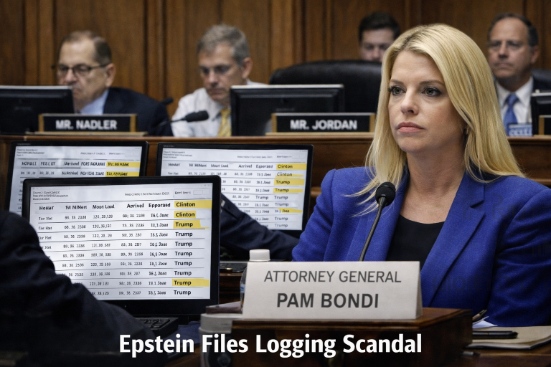

The Epstein files logging controversy exploded into public view this week as the U.S. Department of Justice confirmed it tracks the search history of members of Congress as they sift through unredacted files related to the Jeffrey Epstein investigation. What started as a transparency effort under the Epstein Files Transparency Act has become a shocking and controversial clash over privacy, oversight, and inter-branch trust. The Epstein files logging issue has inflamed bipartisan criticism, raised questions about the DOJ’s motives, and put Attorney General Pam Bondi under intense scrutiny as lawmakers from both parties demand answers and accountability.
Bipartisan Backlash to Epstein Files Logging Practices
At the heart of the Epstein files logging uproar is the revelation that the DOJ logs every search query lawmakers perform while reviewing previously redacted materials made available in a secure DOJ setting. According to the department, this practice is intended to protect sensitive victim information and prevent inadvertent disclosure as Congress examines the files.
But lawmakers were stunned when it became public that Attorney General Bondi appeared at a House Judiciary Committee hearing holding a printout labeled “Jayapal Pramila Search History,” listing specific files accessed by Rep. Pramila Jayapal.
Jayapal and others described the monitoring as “totally unacceptable” and a violation of the separation of powers, accusing the DOJ of spying on congressional oversight activities.
Lawmakers Speak Out as Epstein Files Logging Sparks Outrage
Democratic lawmakers, including Rep. Jamie Raskin, have demanded an inspector general investigation into the Epstein files logging practice, framing it as a breach of trust that threatens the independence of Congress’s oversight role.
Even Republican House Speaker Mike Johnson, typically aligned with the administration, broke ranks to criticize what he described as “inappropriate” tracking of lawmakers’ searches — a rare rebuke from the GOP leadership.
At the same congressional hearing where the search history document was displayed, tensions escalated as lawmakers questioned why the DOJ would record and retain detailed logs of queries made on department systems while reviewing unredacted files.
The Scale of the Epstein Files Logging Controversy
Understanding the scope of the Epstein files logging issue requires grasping key procedural facts:
- DOJ logs all searches made by lawmakers reviewing unredacted Epstein files.
- Printouts of search histories were shown at a House hearing, including specific activity tied to lawmakers.
- Bipartisan backlash has emerged, with calls for investigations into whether this monitoring is appropriate.
This situation underscores the complex balance between protecting sensitive victims’ data and respecting the autonomy of congressional oversight.
Why Epstein Files Logging Is a Flashpoint
The Epstein files logging controversy comes amid broader debates over the DOJ’s handling of millions of pages of documents related to Jeffrey Epstein’s network, his crimes, and associates. Congress passed the Epstein Files Transparency Act in 2025 to force the release of these records, but critics argue the department has dragged its feet and imposed excessive redactions.
When lawmakers were finally granted controlled access to unredacted files, the DOJ’s decision to log search histories was described by some as an overreach. Critics argue that tracking lawmaker queries diminishes the separation of powers and could chill robust legislative review.
Proponents of the logging practice, including the DOJ, assert that tying search activity to individuals helps ensure that staff — who have not been granted access — do not inadvertently leak sensitive material online or expose victims’ identities.
Privacy, Oversight, and the Rule of Law
At the center of the Epstein files logging debate are competing priorities: preserving the privacy of survivors and respecting statutory obligations, while maintaining the fundamental oversight role of Congress.
Victim advocacy groups have raised alarms that files were released with insufficient protections, leading the DOJ to tighten control mechanisms. Yet lawmakers insist that tracking their searches crosses a line, converting an intended transparency effort into surveillance.
Some legal experts note that while the DOJ has the technical ability to record searches, doing so against members of Congress reviewing materials as part of statutory oversight carries constitutional implications. Others say the practice might reflect outdated technology or internal policy decisions rather than intentional spying.
Next Steps and Potential Investigations
Lawmakers are already demanding answers. Rep. Raskin has formally requested an inspector general review of the Epstein files logging practices, and bipartisan pressure is mounting for the DOJ to halt tracking and provide full transparency about what is recorded, how it is used, and who has access.
House Judiciary Committee members are exploring whether to expand access to senior congressional staff and cut restrictions on how files can be examined, seeing this as a way to reduce reliance on DOJ-controlled systems.
The political firestorm shows no sign of abating, with both parties keen to protect oversight prerogatives while balancing privacy concerns tied to victim identities.
Conclusion
The Epstein files logging controversy has shifted from a technical detail in a document release process into a full-blown political dispute over transparency, privacy, and the constitutional boundaries between Congress and the Department of Justice. As lawmakers, victims’ advocates, and the DOJ spar over how to handle sensitive material and oversight responsibilities, the issue has exposed deep mistrust and a critical need for clear policies that protect survivors while respecting legislative independence. Whether this leads to new legislation, investigations, or procedural reforms remains to be seen — but one thing is clear: the debate over how the Epstein files are managed will continue to reverberate across Capitol Hill.