A Symbol of American Power in Global Trade
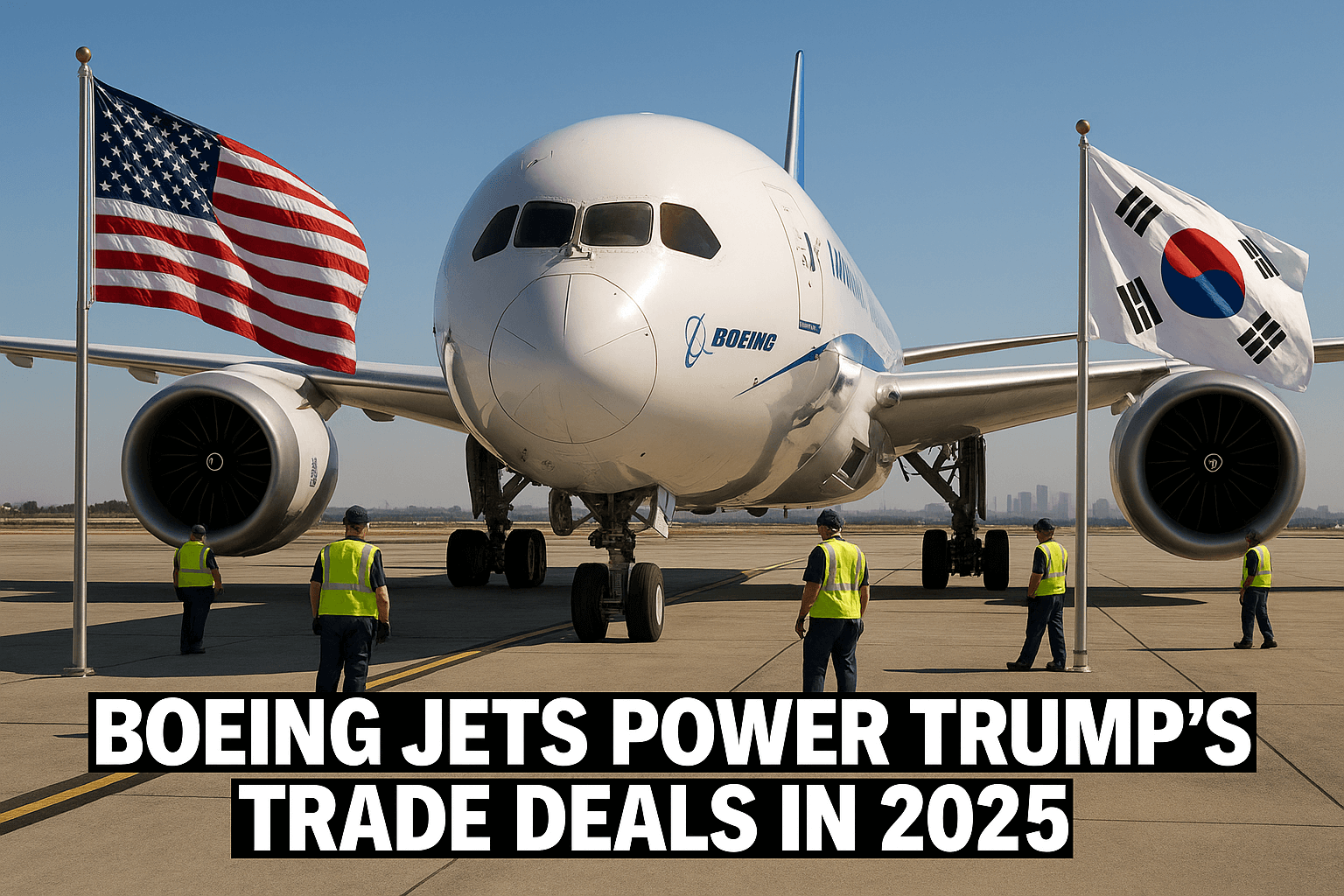
In a world reshaped by U.S. President Donald Trump’s aggressive trade policies, one American icon stands out: Boeing. From South Korea to Japan, the UK to Indonesia, Boeing aircraft have become a cornerstone of trade agreements in 2025, blending economic pragmatism with political showmanship. These deals, often announced with fanfare, reflect a strategic push to bolster U.S. exports while addressing trade deficits. But why do Boeing jets feature so prominently, and what do these agreements mean for global commerce? Let’s dive into the story behind this high-flying phenomenon.
The Human and Economic Impact of Boeing’s Role
For the workers at Boeing’s factories in Seattle and beyond, these trade deals are more than headlines—they’re lifelines. The $36.2 billion order from Korean Air for 103 Boeing jets, announced during South Korean President Lee Jae Myung’s visit to Washington, is expected to support 135,000 U.S. jobs. Families in manufacturing hubs breathe a sigh of relief as orders pour in, offering stability after years of Boeing’s safety scandals, including a 2024 Alaska Airlines door panel blowout. For countries like Japan and Indonesia, purchasing Boeing jets signals a commitment to stronger U.S. ties, often securing lower tariffs in return. These deals weave together economic survival and geopolitical strategy, impacting millions across borders.
Facts and Figures: Boeing’s Trade Triumphs
The numbers tell a compelling story. South Korea’s Korean Air ordered 103 Boeing aircraft, including 20 777-9s, 25 787-10s, 50 737-10s, and eight 777-8 Freighters, valued at $36.2 billion, with an additional $13.7 billion deal for GE Aerospace engines. Japan committed to 100 Boeing jets, though the value remains undisclosed. The UK secured a $10 billion Boeing order, followed by British Airways’ parent company IAG announcing a $12.7 billion deal for 32 jets. Smaller economies like Indonesia (50 jets) and Malaysia have also joined the trend, often as part of tariff negotiations. Boeing’s production backlog now spans 11.5 years, outpacing Airbus’s 10.6 years, according to Forecast International. These figures underscore Boeing’s pivotal role in Trump’s trade strategy.
The Broader Context: Trade Wars and Global Demand
Trump’s trade deals, often forged under the threat of steep tariffs (like the 32% levy threatened on Indonesia), reflect a shift from traditional free trade to bilateral agreements heavy on symbolism. Boeing jets, as high-value, high-profile exports, serve as a perfect tool. Unlike steel or rice, which can disrupt domestic industries (e.g., South Korea’s steel exports or Japan’s protected rice market), aircraft purchases face little political resistance. The global tourism industry’s rebound, with airline profits projected to hit $36 billion in 2025 per the International Air Transport Association, further fuels demand for Boeing’s jets. This aligns with Trump’s push to reduce U.S. trade deficits, such as the $18 billion goods deficit with Indonesia in 2024. Yet, critics argue these deals are as much about optics as economics, with Boeing’s iconic status amplifying their appeal.
What Lies Ahead: Balancing Symbolism and Substance
As countries navigate Trump’s tariff threats, Boeing’s order book grows, but questions linger. Are these deals purely performative, or do they signal a lasting shift in global trade? The long delivery timelines—over a decade for Boeing—offer flexibility, allowing countries to commit now and pay later. However, Boeing’s recovery from safety scandals and a 2024 strike that disrupted production remains critical. For workers, airlines, and governments, the stakes are high. These agreements could reshape supply chains and strengthen U.S. manufacturing, but only if Boeing delivers on quality and trust. Globally, the deals highlight a new era of trade diplomacy, where economic needs meet political theater.
Challenges in Execution
Boeing’s challenges extend beyond trade deals. A near eight-week strike in 2024 disrupted production, and ongoing quality concerns require vigilance. Yet, airline executives are regaining confidence in Boeing’s ability to deliver, as noted in a Reuters report from August 2025.
Conclusion: Boeing’s High-Flying Role in Trump’s Trade Vision
Boeing jets have become more than just aircraft in 2025—they’re symbols of American economic might and diplomatic leverage. From South Korea’s massive order to Indonesia’s strategic purchases, these deals reflect a delicate balance of pragmatism and performance in Trump’s trade strategy. As Boeing soars in global agreements, it carries the hopes of U.S. workers and the weight of geopolitical negotiations, shaping the future of trade one jet at a time.