
A Battle for Truth Amid Political Firestorms
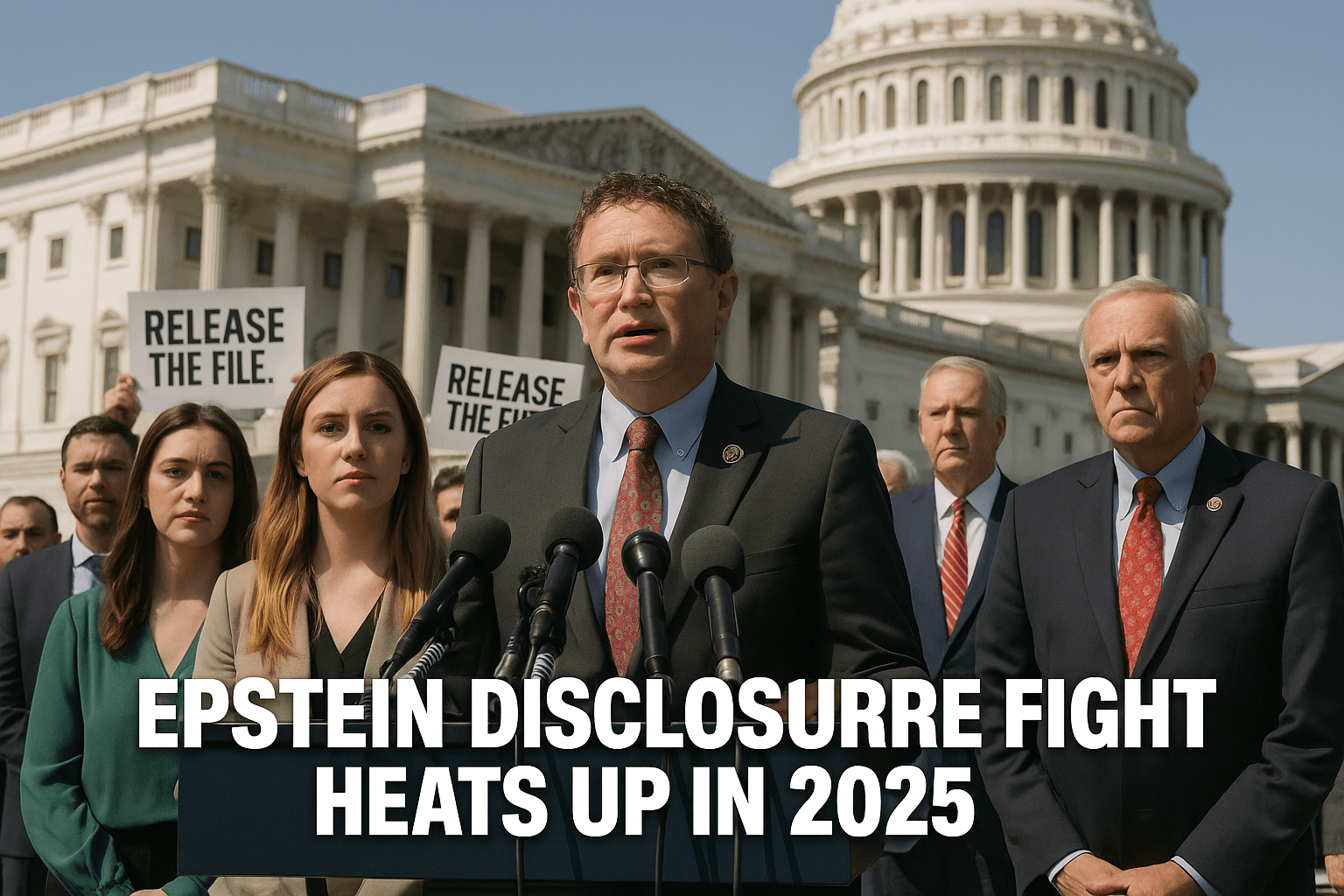
The push to unveil the full scope of Jeffrey Epstein’s federal investigation files has ignited a fierce battle in Washington, D.C., as survivors and lawmakers demand transparency. Led by Rep. Thomas Massie (R-Ky.) and Rep. Ro Khanna (D-Calif.), a bipartisan effort is gaining traction to force a House vote on releasing all unclassified Epstein documents. With survivors like Chauntae Davies publicly pleading for justice, the issue has captured national attention. But with President Trump and House Speaker Mike Johnson working to quash the effort, will this quest for truth prevail, or will it falter in a deeply divided Congress?
The Human Stakes: Survivors Demand Accountability
For Epstein’s survivors, the fight is deeply personal. At a September 3, 2025, Capitol Hill press conference, women shared harrowing accounts of abuse, urging Congress to uncover the truth. “Who are we covering for?” asked Chauntae Davies, highlighting the pain of secrecy. The emotional weight of these stories has galvanized support, with 134 lawmakers—130 Democrats and four Republicans—signing Massie’s discharge petition to force a vote. Survivors like Marina Lacerda, who spoke of being victimized at 14, underscore the human cost of inaction, fueling public pressure for transparency.
Facts and Figures: The Push for Disclosure
The Epstein disclosure bill, H.Res.577, demands the immediate release of all federal Epstein-related documents, with redactions only to protect victims’ identities and ongoing cases. As of September 8, 2025, the petition has 216 signatures, just two shy of the 218 needed to force a House vote. The House Oversight Committee released 33,000 pages of documents on September 2, but 97% were already public, per Democrats, prompting accusations of a superficial effort. With three House vacancies up for election, potential Democratic wins could secure the votes needed. However, the Senate, requiring 60 votes, and Trump’s likely veto pose significant hurdles.
The Broader Context: A Political Tug-of-War
The Epstein case has long been a lightning rod, with Trump himself once fueling speculation about a hidden “client list.” Now, his administration resists full disclosure, calling it a “Democrat hoax.” House Speaker Mike Johnson’s alternative resolution, passed on September 3, merely supports the ongoing Oversight Committee probe, which critics like Massie call a “placebo” to placate GOP rebels. The issue has exposed GOP rifts, with figures like Reps. Marjorie Taylor Greene and Nancy Mace backing Massie despite Trump’s opposition. Public pressure, amplified by survivors’ Capitol Hill rally, has kept the issue alive, challenging Trump’s grip on his party as a government shutdown looms by September’s end.
What Lies Ahead: A Test of Wills
The discharge petition’s fate hinges on securing two more Republican signatures, with special elections in Virginia and Arizona potentially tipping the balance. If successful, the bill could pass the House by late September 2025, but Senate approval and Trump’s signature remain unlikely. Johnson’s efforts to suppress the petition, including offering a symbolic vote, reflect a strategy to maintain GOP unity. Yet, Massie’s defiance, despite losing his Rules Committee seat, signals a broader rebellion against party loyalty. The outcome will test whether Congress prioritizes survivors’ justice or political expediency.
The Senate Roadblock
Even if the House approves the bill, the Senate’s 60-vote threshold and Majority Leader John Thune’s alignment with Trump make passage improbable. The administration’s push for controlled releases, citing privacy laws, further complicates full disclosure.
Conclusion: A Fight for Justice in a Divided Congress
The Epstein disclosure bill is more than a legislative battle—it’s a moral reckoning. Survivors’ voices have thrust this issue into the spotlight, challenging Congress to confront a painful past. As Massie and Khanna near the 218-signature goal, the nation watches to see if transparency will triumph over political maneuvering. In a Congress teetering on the edge of chaos, the fight for Epstein’s files could reshape trust in Washington—and justice for victims.